Occupy Cinema › Film News
A24 Re-Releases Kane Parsons' 'Backrooms' With Extended Cut and Exclusive Post-Credit Content
A24 has re-released Kane Parsons' 'Backrooms' in an extended version, dubbed 'Everything Must Go Edition,' featuring additional footage and a cinema-exclusive post-credit scene.
By Occupy Cinema ·
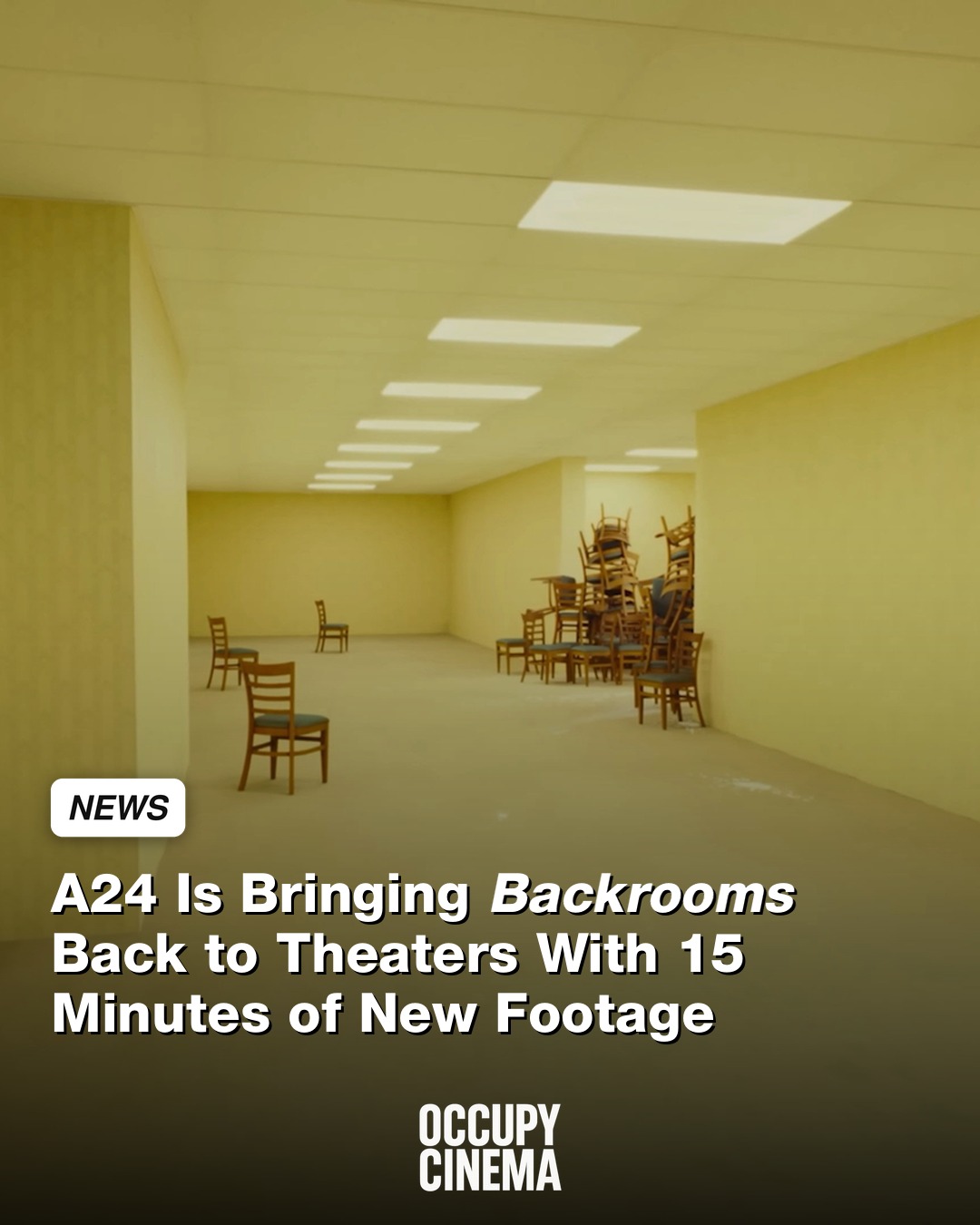
A24 has initiated a theatrical re-release for Kane Parsons' 'Backrooms,' presenting an expanded cut titled 'Backrooms: Everything Must Go Edition.' This revised version, which premiered on Friday, July 3, incorporates approximately 15 minutes of new material, elevating the film's runtime from its initial 1 hour 51 minutes to 2 hours 6 minutes. Notably, this re-release concludes with a post-credit sequence that A24 has designated as exclusive to theatrical exhibition, a strategy often employed to incentivize cinema attendance.
The 'Backrooms' phenomenon originated as a YouTube horror series developed by Parsons under the moniker Kane Pixels. Parsons, then a teenager, adapted the internet creepypasta narrative of an infinite labyrinth of yellow-carpeted rooms into a series of short films. These early productions garnered significant viewership, accumulating millions of impressions and establishing a substantial online following for the nascent concept. A24 subsequently acquired and developed a feature-length adaptation, which saw its initial release in late May.
The newly integrated footage in the 'Everything Must Go Edition' is reported to delve further into the operations of the Async Research Institute. This fictional entity is portrayed as the organization responsible for inadvertently establishing the portal to the titular Backrooms. The expansion of this narrative thread allows for a deeper exploration of the lore and the internal dynamics surrounding the anomaly, providing additional context for the labyrinthine, liminal spaces. Such narrative extensions can be crucial for films that originate from expansive, community-driven online mythologies, as they cater to an audience already invested in the broader fictional universe.
The Evolution of a Viral Phenomenon
The trajectory of 'Backrooms' from a user-generated online concept to a theatrically distributed feature film, and now to an extended re-release, illustrates a compelling pathway for contemporary horror properties. The film's genesis as a YouTube series, cultivated by a young creator, underscores the increasing influence of digital platforms in identifying and nurturing talent. This model of adaptation, where a viral online property is translated to a commercial cinematic product, is becoming a more frequent occurrence in the industry, reflecting a shift in content acquisition strategies. A24, known for its distinctive approach to genre filmmaking, has frequently demonstrated an aptitude for identifying and developing unconventional projects, often with a strong emphasis on directorial vision.
Strategic Re-Releases in the Modern Market
The decision to re-release 'Backrooms' with supplementary material and a theater-exclusive post-credit scene is a calculated maneuver in the current exhibition landscape. In an era where streaming services offer immediate access to content, theatrical exclusivity, even for a limited period, serves as a significant draw. This strategy aims to reignite public interest, encourage repeat viewings from initial patrons, and attract new audiences who may have missed the original theatrical run. It also allows A24 to capitalize further on the film's existing momentum and the established fanbase of Kane Parsons's original work. The additional content, particularly when it expands upon critical narrative elements like the Async Research Institute, offers a tangible incentive for viewers to return to cinemas. For those interested in the technical aspects of capturing such liminal spaces, the film's aesthetic often relies on practical effects and specific lens choices to achieve its unsettling atmosphere, reminiscent of earlier found-footage horror. Consider the impact of a set of anamorphic lenses or even vintage surveillance camera aesthetics, which might have influenced the visual language of the original YouTube shorts.
Marcus Bell, Cinematography and Craft, Occupy Cinema.