Occupy Cinema › Film News
The Whispering Sands, The Psychedelic Eye: Denis Villeneuve's Secret Unit on Dune Part Two
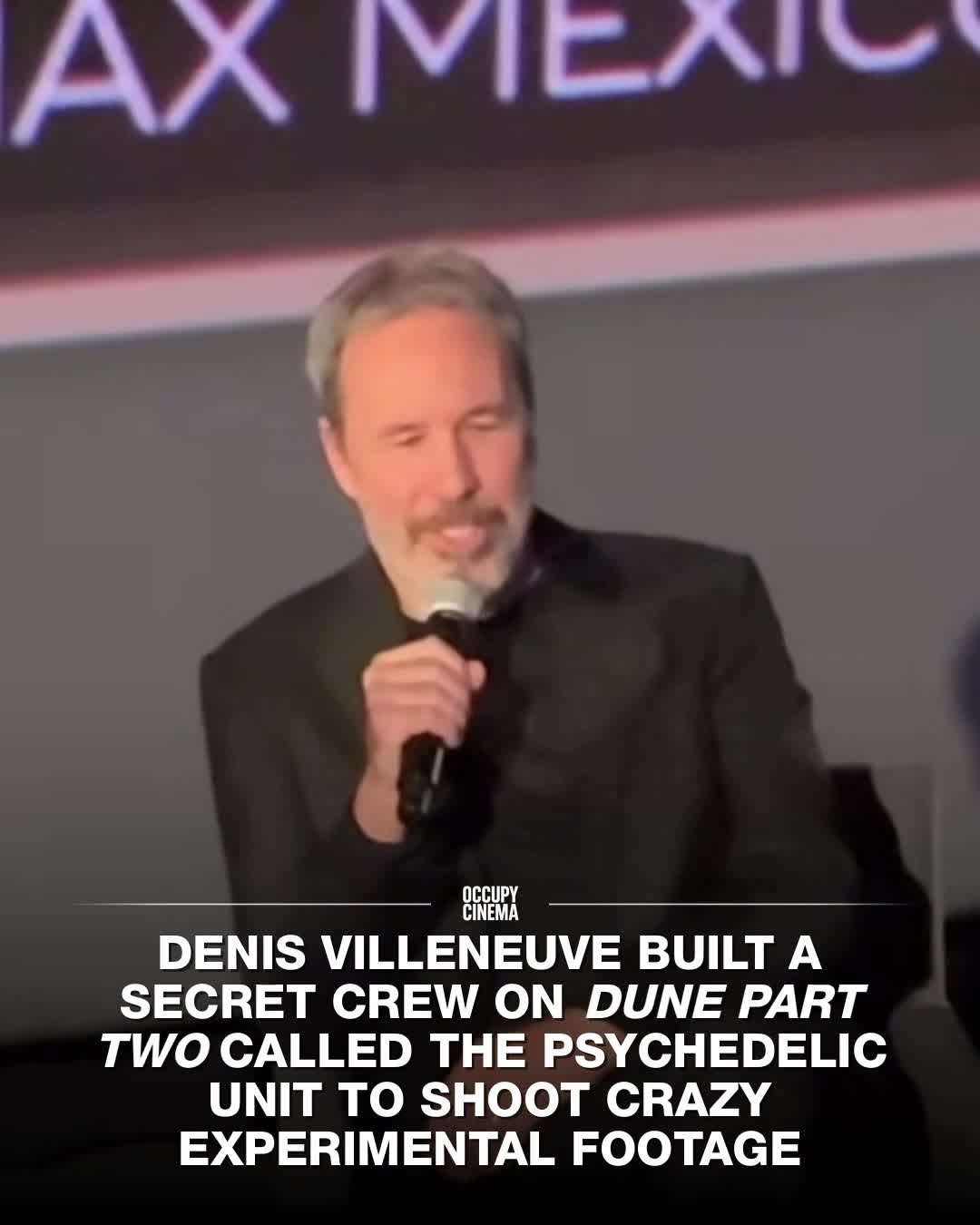
A glimpse into the unconventional methods employed by Denis Villeneuve on Dune Part Two , where a small, clandestine team known as the 'psychedelic unit' brought a unique visual texture to the epic.
By Occupy Cinema ·
The desert, in its vast, indifferent glory, holds secrets beneath its shifting sands. Light plays tricks upon it, and the wind whispers tales of other worlds. It is perhaps this very essence of the ephemeral and the profound that Denis Villeneuve sought to capture with a unique approach to filmmaking on Dune Part Two, a method both intimate and expansive.
Reports from the set speak of a small, almost clandestine crew, affectionately dubbed the 'psychedelic unit' by Villeneuve himself. This unusual team, led by two young French Canadians, Christophe Rando and Salome, was tasked with a singular, evocative purpose: to shoot what is described as 'crazy, insane footage' that would later be woven into the fabric of the film. It suggests a director deeply attuned to the nuances of visual language, willing to explore beyond conventional boundaries to capture the ineffable.
The Experimental Spirit
Villeneuve's cinematic roots are famously entwined with the experimental tradition of the National Film Board of Canada, an institution renowned for fostering unconventional storytelling and pushing the boundaries of the moving image. This background, steeped in a rich history of avant, garde shorts, clearly informed his decision to create this specialized unit. It speaks to a commitment to artistic exploration, where the raw, untamed energy of experimental cinema can be harnessed to enrich a blockbuster narrative. One can imagine the unit, unburdened by the usual constraints of a massive production, chasing fleeting moments of light, texture, and movement, perhaps even venturing into abstract interpretations of the desert's hallucinatory beauty.
This approach stands in fascinating contrast to the meticulous, large, scale planning often associated with a production of Dune's magnitude. It suggests a director who understands that true grandeur often requires moments of unscripted, almost intuitive capture. The Hollywood Reporter has often highlighted the meticulous detail involved in Villeneuve's world, building, yet this 'psychedelic unit' reveals a softer, more improvisational side to his process, a willingness to embrace the unexpected.
A Tapestry of Visions
The integration of such footage would undoubtedly contribute to the film's immersive quality, adding layers of sensory experience that transcend traditional narrative. It is akin to a painter adding unexpected brushstrokes or a composer introducing an unusual timbre, creating a richer, more complex work. This echoes the work of auteurs like Andrei Tarkovsky, whose films often incorporate dreamlike sequences and tactile observations of nature to deepen their spiritual and philosophical resonance.
Filmmaking, at its heart, is an act of creation, of building worlds and emotions from light and shadow. Villeneuve's 'psychedelic unit' is a testament to this creative spirit, a quiet rebellion against the purely functional, in pursuit of something more profound. It is a reminder that even within the most epic of canvases, there is room for the intimate, the experimental, and the gloriously, beautifully insane. IndieWire has discussed the director's visual ambition at length, and this unit seems to be a key component in realizing that vision.
Luna Greenwood, World and Arthouse, Occupy Cinema.
Related reading: Making Movies by Sidney Lumet, a master class on the craft of filmmaking.