Occupy Cinema › Film News
The Unbearable Weight of Witness: Elem Klimov's 'Come and See'
Elem Klimov's harrowing 1985 masterpiece 'Come and See' stands as a chilling testament to the brutal realities of war, a film that burns itself into the viewer's memory.
By Occupy Cinema ·
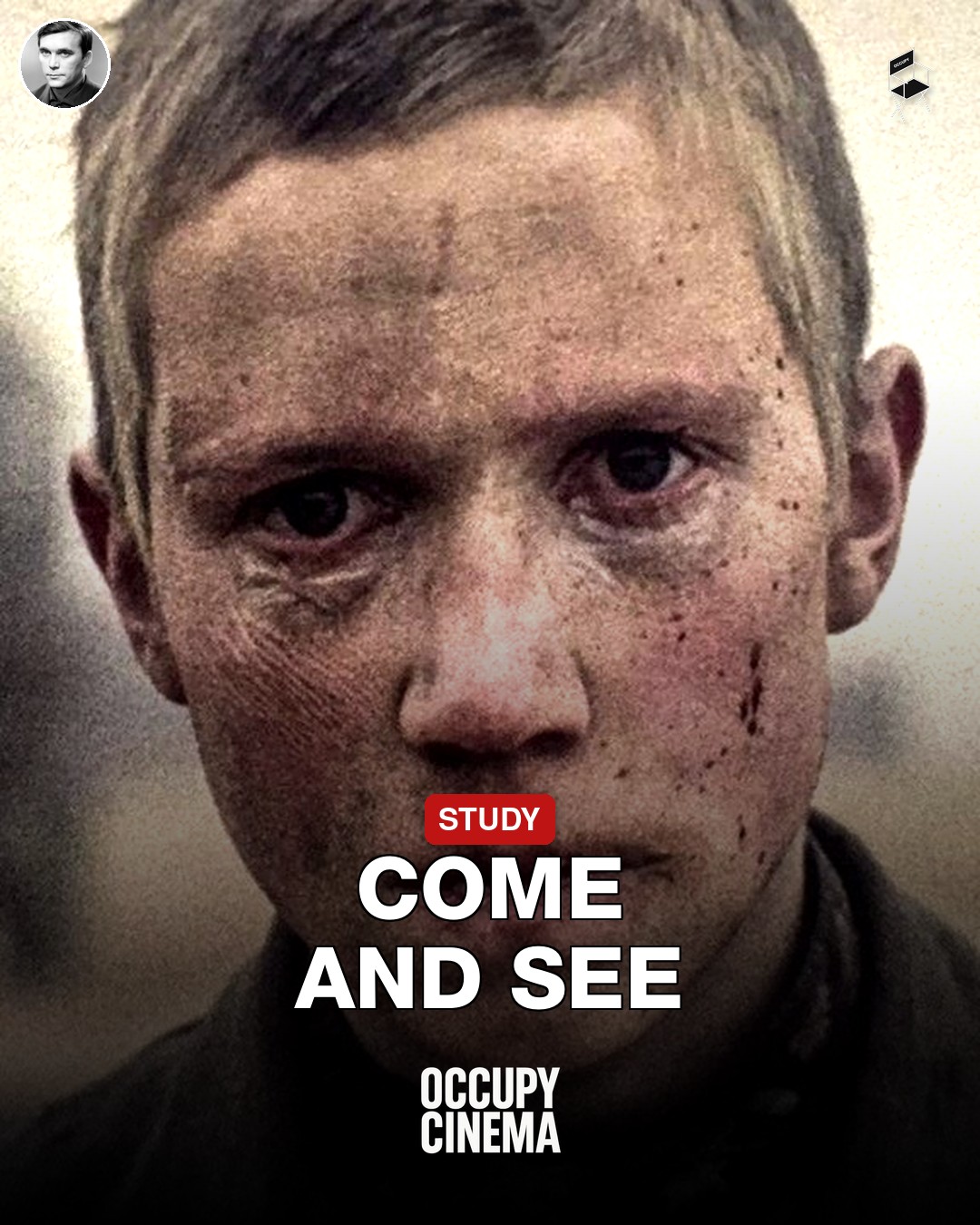
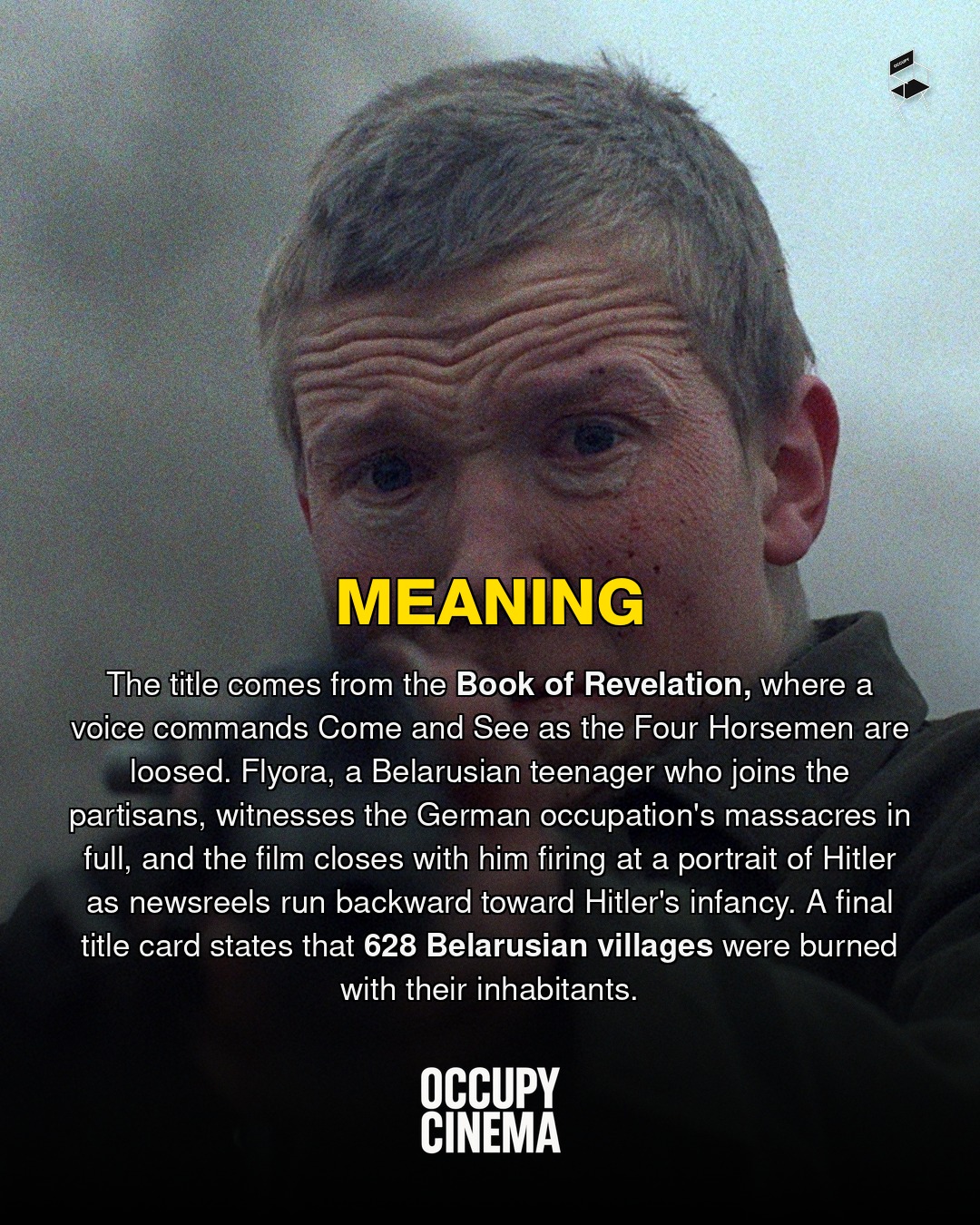
A boy's face, wide with a terror that seems to stretch beyond the frame into our own world, becomes a landscape of human suffering. This is the enduring image of Elem Klimov's Come and See, a film not merely about war but about the shattering of innocence and the indelible scars left by atrocity. Released in 1985, this Soviet anti-war epic remains a cinematic scream, a work so visceral and unflinching that it feels less like a narrative and more like a shared nightmare.
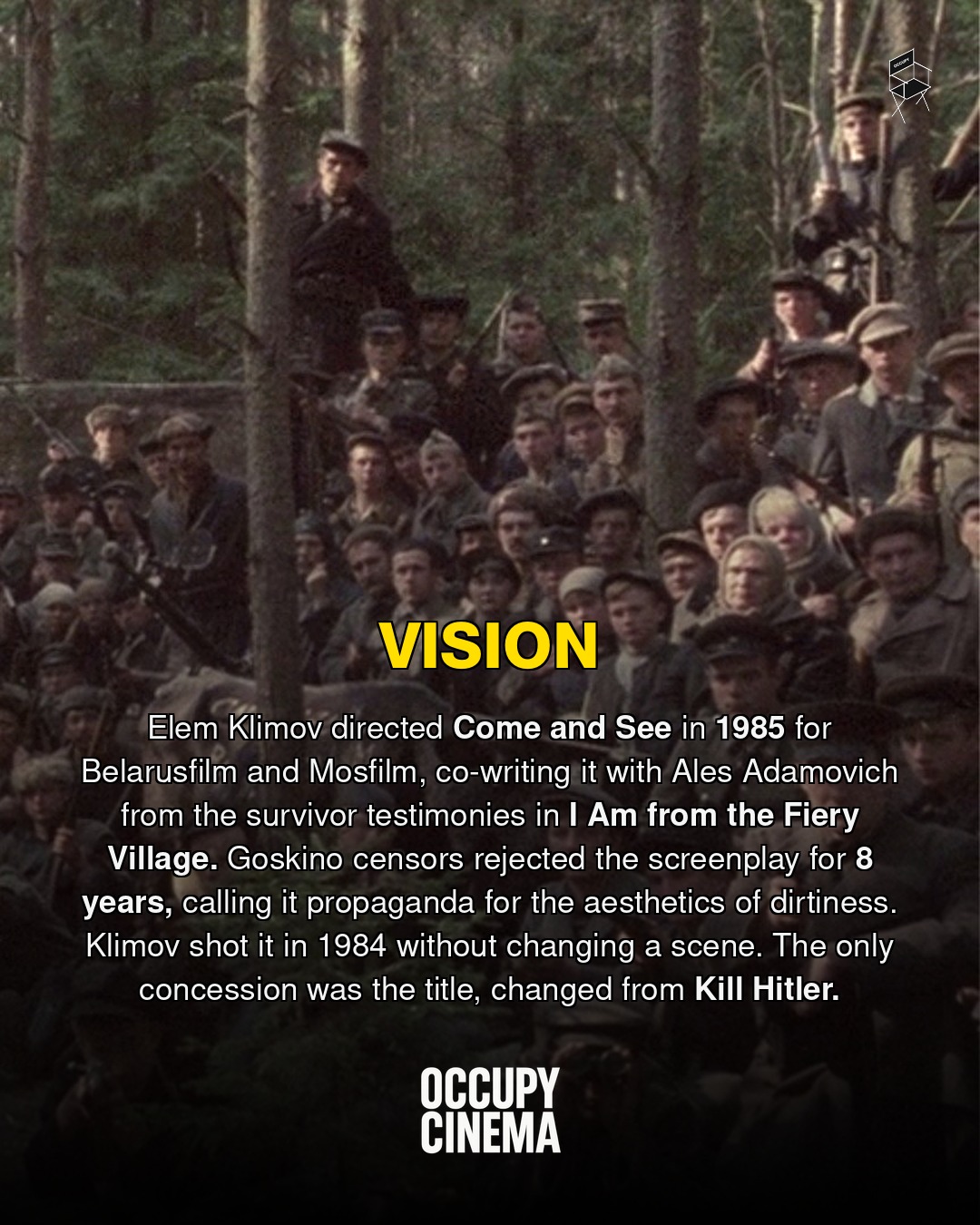
Klimov, alongside co-writer Ales Adamovich, meticulously crafted the screenplay from Adamovich's novel Khatyn and the chilling survivor testimonies collected in I Am from the Fiery Village. The journey to the screen was fraught with resistance, as Goskino censors, the Soviet state film committee, held the screenplay captive for eight long years. Yet, Klimov's vision remained uncompromised. He finally brought the film to life in 1984, retaining every detail of his original script, altering only the title from the stark and provocative 'Kill Hitler' to the more evocative 'Come and See'.
A Landscape of Despair
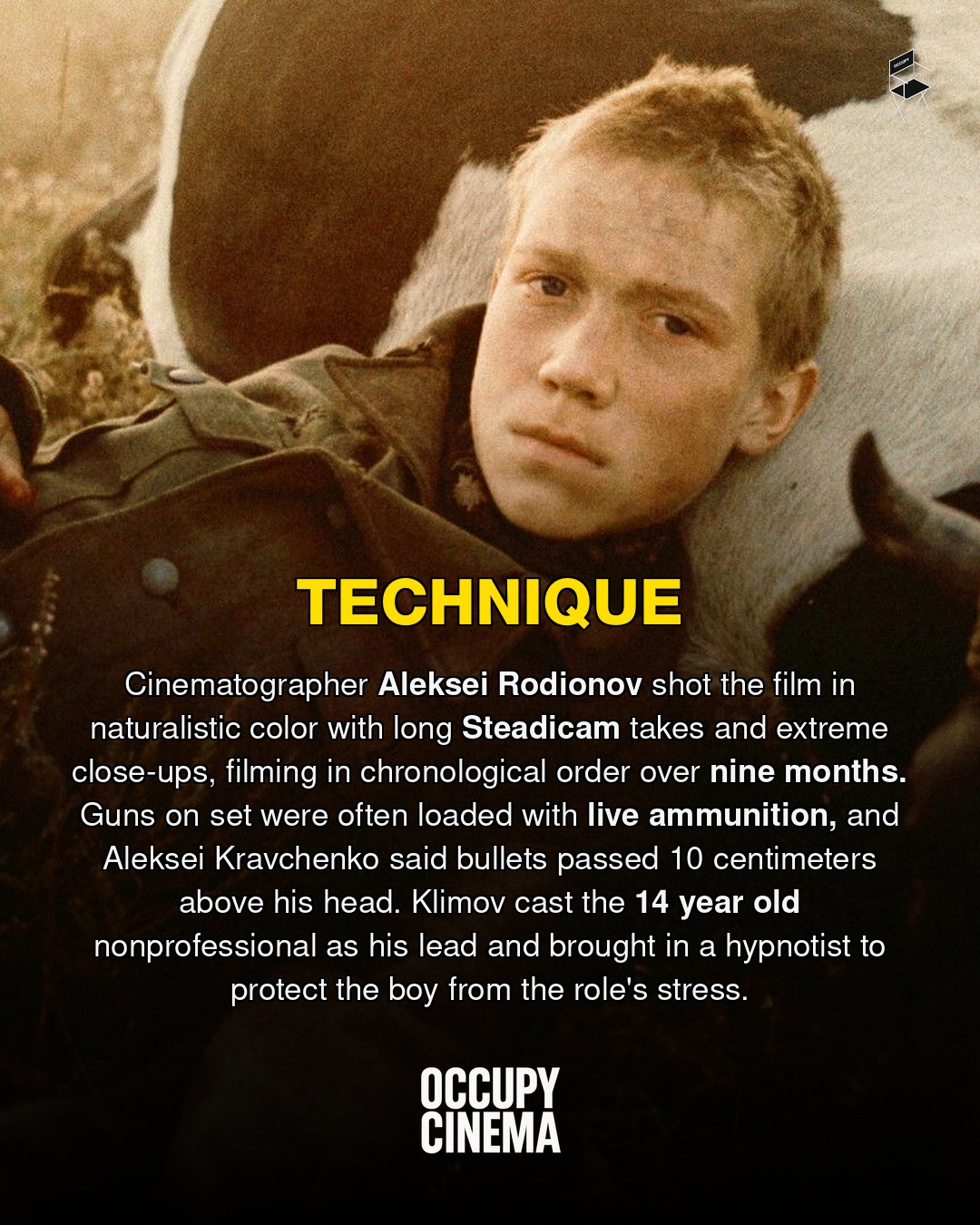
The film's impact is profoundly tied to its visual language. Cinematographer Aleksei Rodionov, using a Steadicam, immerses us in the unfolding horror with long, unbroken takes, creating a sense of relentless, inescapable presence. The decision to shoot in naturalistic color over nine months, chronologically mirroring the narrative's progression, lends an unsettling authenticity to the proceedings. Every fallen leaf, every muddy footprint, every flicker of light against a desperate face feels acutely real. At the heart of this visual tapestry is the remarkable performance of 14-year-old nonprofessional actor Aleksei Kravchenko, who carries nearly every frame of the film. His journey from wide-eyed boy to shell-shocked witness is the film's emotional anchor, a testament to the brutalizing power of war.
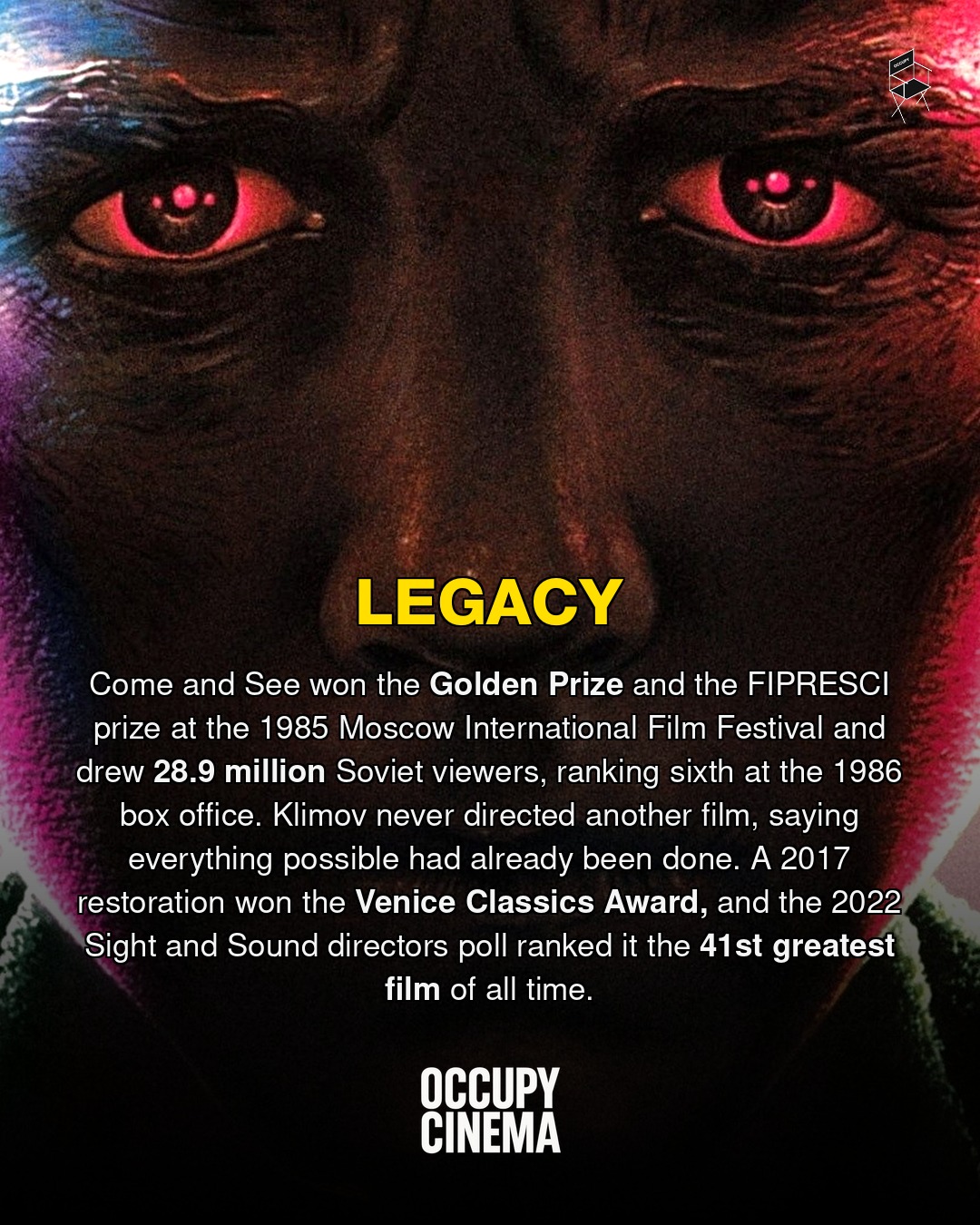
Upon its release, Come and See garnered significant critical acclaim, winning the Golden Prize and the FIPRESCI Prize at the 1985 Moscow International Film Festival. Its resonance extended beyond critical circles, drawing an astonishing 28.9 million Soviet viewers and ranking as the sixth highest-grossing film there in 1986. Yet, for all its triumph, Come and See marked a poignant end to a brilliant career; Elem Klimov, having poured his soul into this monumental work, never directed another film. Perhaps he had said all he needed to say, his artistic wellspring exhausted by the sheer emotional weight of the project.
Enduring Legacy
The film's legacy has only deepened with time. A 2017 restoration, which earned the Venice Classics Award for Best Restored Film, allowed new generations to experience its raw power with renewed clarity. The Criterion Collection's 2020 release further cemented its place in the pantheon of cinematic masterpieces. Most recently, the 2022 Sight and Sound directors poll, a highly respected barometer of critical consensus, ranked Come and See 41st among the greatest films ever made, a testament to its enduring power and influence.
Which single shot, one might ask, truly haunts the viewer long after the credits roll? Is it the close-up of a face contorted by the unthinkable, or the slow, almost balletic tracking shot through a village reduced to ashes? For many, it is the chilling realization that humanity's capacity for both cruelty and resilience is boundless, captured in every meticulously framed moment of this essential, unforgettable film.