Occupy Cinema › Film News
The Unbearable Weight of Witness: Elem Klimov's 'Come and See'
Elem Klimov's harrowing 1985 masterpiece, 'Come and See', stands as a monumental work of Soviet cinema, a film that burns itself into the very fabric of memory with its unflinching portrayal of war's barbaric cruelty.
By Occupy Cinema ·
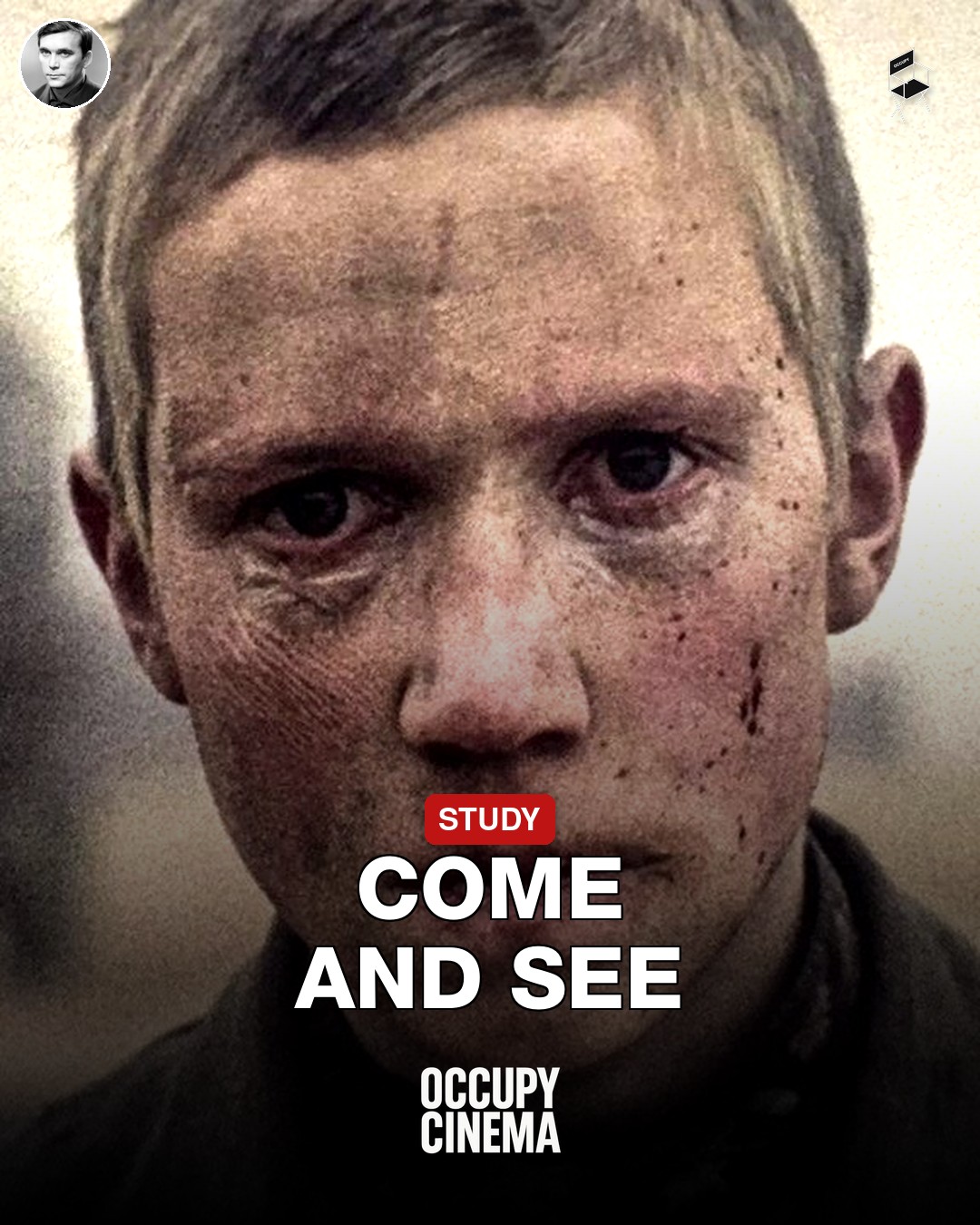
A boy's face, streaked with mud and shock, reflects the sudden, brutal flash of a nearby explosion. His eyes, once bright with innocence, become wells of unspeakable horror. This is the enduring image of Elem Klimov's Come and See, a film that does not merely depict war, but forces its audience to bear witness to its soul-scouring devastation. Released in 1985, this Soviet anti-war epic remains a cinematic scream, a testament to humanity's capacity for both resilience and unimaginable cruelty.
The journey to the screen for Come and See was as fraught as the narrative it portrays. Co-written by Klimov and Ales Adamovich, drawing from Adamovich's novels Khatyn and I Am from the Fiery Village, which chronicled real survivor testimonies, the screenplay faced an eight-year blockade by Goskino censors. Its original title, Kill Hitler, hints at the raw, visceral anger that permeates every frame. Yet, Klimov, unyielding in his vision, filmed it in 1984 without altering a single scene, a testament to his artistic integrity and profound commitment to the truth.
A Landscape Etched in Pain
Cinematographer Aleksei Rodionov's work is not merely photography, it is an act of historical preservation. His naturalistic use of color, often muted and despairing, works in tandem with long, unsettling Steadicam takes that plunge the viewer directly into the chaos. The production itself was an ordeal, spanning nine months of chronological filming, a method that allowed the young, nonprofessional lead, 14-year-old Aleksei Kravchenko, to embody the gradual unraveling of his character, Flyora. Kravchenko carries nearly every frame, his transformation from hopeful boy to hollowed-out survivor unfolding before our very eyes, a profound and disturbing testament to the film's immersive power.
The film's initial reception underscored its immense impact. It garnered the Golden Prize and the FIPRESCI prize at the 1985 Moscow International Film Festival, signaling its critical acclaim within the Soviet Union and beyond. Commercially, it resonated deeply with audiences, drawing 28.9 million Soviet viewers and ranking sixth at the 1986 box office, a remarkable achievement for such a relentlessly challenging work. This success came despite, or perhaps because of, its uncompromising brutality.
The Echoes of a Masterpiece
Tragically, Elem Klimov never directed another film after Come and See. Some speculate that the creative and emotional toll of bringing such a story to life left him with nothing more to say, while others suggest the changing political landscape of the Soviet Union played a role. Regardless, this single work cemented his legacy as a master filmmaker, a rare and powerful voice whose vision transcended national boundaries.
The film's enduring relevance is continuously affirmed. A meticulous 2017 restoration, which earned the Venice Classics Award for Best Restored Film, allowed new generations to experience its harrowing beauty with renewed clarity. The Criterion Collection released its definitive edition in 2020, further cementing its place in the pantheon of world cinema. Most recently, the prestigious 2022 Sight and Sound directors poll ranked it an astonishing 41st among the greatest films ever made, a testament to its profound and lasting influence on filmmakers worldwide. Come and See is not merely a war film, it is a primal scream against the very idea of war, a film that continues to challenge, disturb, and ultimately, profoundly move all who encounter its stark and unforgettable vision.