Occupy Cinema › Business
Navigating the Ranks: Strategic Entry Points into Film Production
Securing a position on a film set often involves a more direct approach than traditional corporate hiring, emphasizing departmental networking over HR applications. Understanding specific crew hierarchies and making targeted contacts is key.
By Occupy Cinema ·

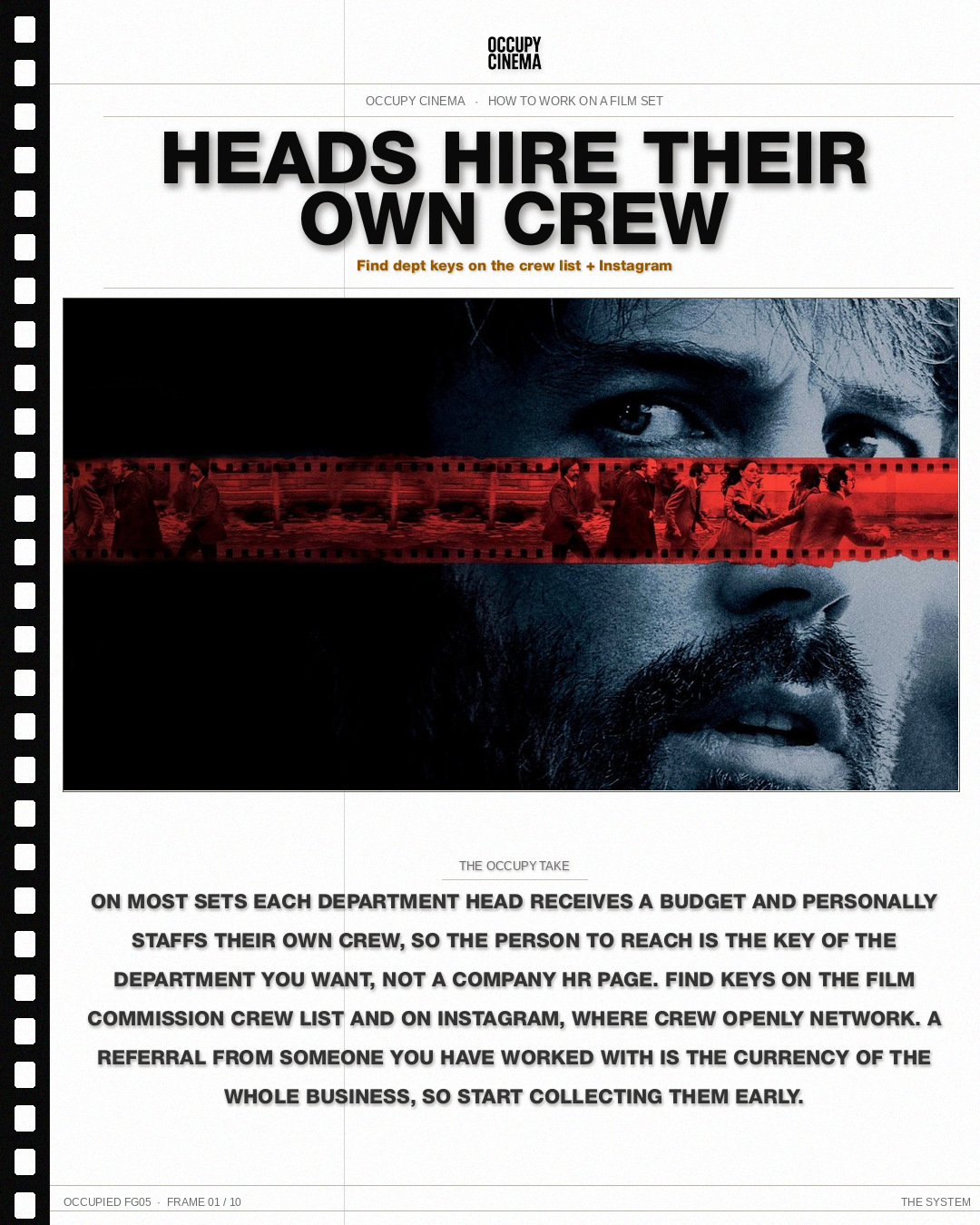
Entry into the film industry, particularly onto a union set, frequently bypasses conventional human resources channels. Instead, the established method involves direct engagement with department heads or their key personnel. These individuals are typically responsible for staffing their own crews, operating within a given budget, and building their teams through a blend of professional reputation and direct recommendations. The crucial insight for aspiring crew members is to identify the specific department of interest and then target the relevant key or mid-level crew member, rather than submitting applications to a centralized HR department that often does not exist in the traditional sense on a film production.
Consider the camera department, a common aspiration for many entering the industry. The progression generally begins as a camera production assistant, moving to second assistant camera, then first assistant camera, followed by camera operator, and ultimately, director of photography. Each step requires a mastery of specific technical skills and an understanding of on-set protocols. Similarly, the grip and electric departments offer a well-defined career path, often leading to union membership. These roles involve the intricate work of shaping light and rigging sets, providing a consistent demand for skilled labor. The art department, responsible for the visual aesthetic of a film, progresses from set dresser to prop master to art director, culminating in the production designer role. Production itself starts at the set PA level, advancing through assistant director ranks to unit production manager. Post-production, a distinct but equally vital segment, follows a trajectory from post-production assistant to assistant editor, then to editor.
Targeted Networking and Skill Acquisition
The core strategy for entry involves pinpointing a specific craft: sound, wardrobe, or hair and makeup, for example, each represents a distinct career ladder. The recommendation is to select a discipline that one could engage with for extended periods, as production days are notoriously long. Once a department is identified, the next step involves identifying a key or mid-level crew member within that department. These contacts can be found through industry directories, production lists, or increasingly, professional social media platforms. The initial offer of assistance should be direct and practical: local availability, reliability, possession of personal transportation, and a willingness to function as a production assistant within that department. The emphasis is on demonstrating an eagerness to learn and contribute.
The advice to "say yes to everything for a year" is not merely anecdotal, it is a practical pathway to integration. This period allows an individual to gain invaluable on-set experience, understand the rhythm of production, and build a network of contacts who can vouch for their work ethic and competence. It is through this sustained dedication that one transitions from an aspirational outsider to an integral part of the crew. For those interested in the technical aspects of filmmaking, understanding the tools of the trade is also beneficial. For instance, familiarity with cameras such as the ARRI Alexa 35 or the specific characteristics of Zeiss Supreme Prime lenses, common in high-end productions, can provide a significant advantage in camera department roles. Similarly, understanding the nuances of lighting equipment is crucial for grip and electric. For further insights into the varied roles on set, resources like The Hollywood Reporter's coverage of craft departments offer useful context, and Screen Daily often publishes guides on breaking into various film roles. For those specifically looking to understand the unionization process, IATSE's website provides comprehensive information on joining the various craft unions.