Occupy Cinema › Box Office
Product Placement: The Covert Financial Engine of Blockbuster Cinema
Product placement in major film franchises like James Bond represents a significant, often undisclosed, revenue stream, fundamentally altering production economics and the cinematic landscape.
By Occupy Cinema ·
The financial architecture of tentpole cinema is increasingly complex, extending far beyond traditional studio financing and box office receipts. A substantial, if frequently overlooked, component of this architecture is product placement. This practice, where brands integrate their products into film narratives, has evolved from subtle background elements to significant financial contributions, directly influencing production budgets and, by extension, the visual texture of the films themselves.
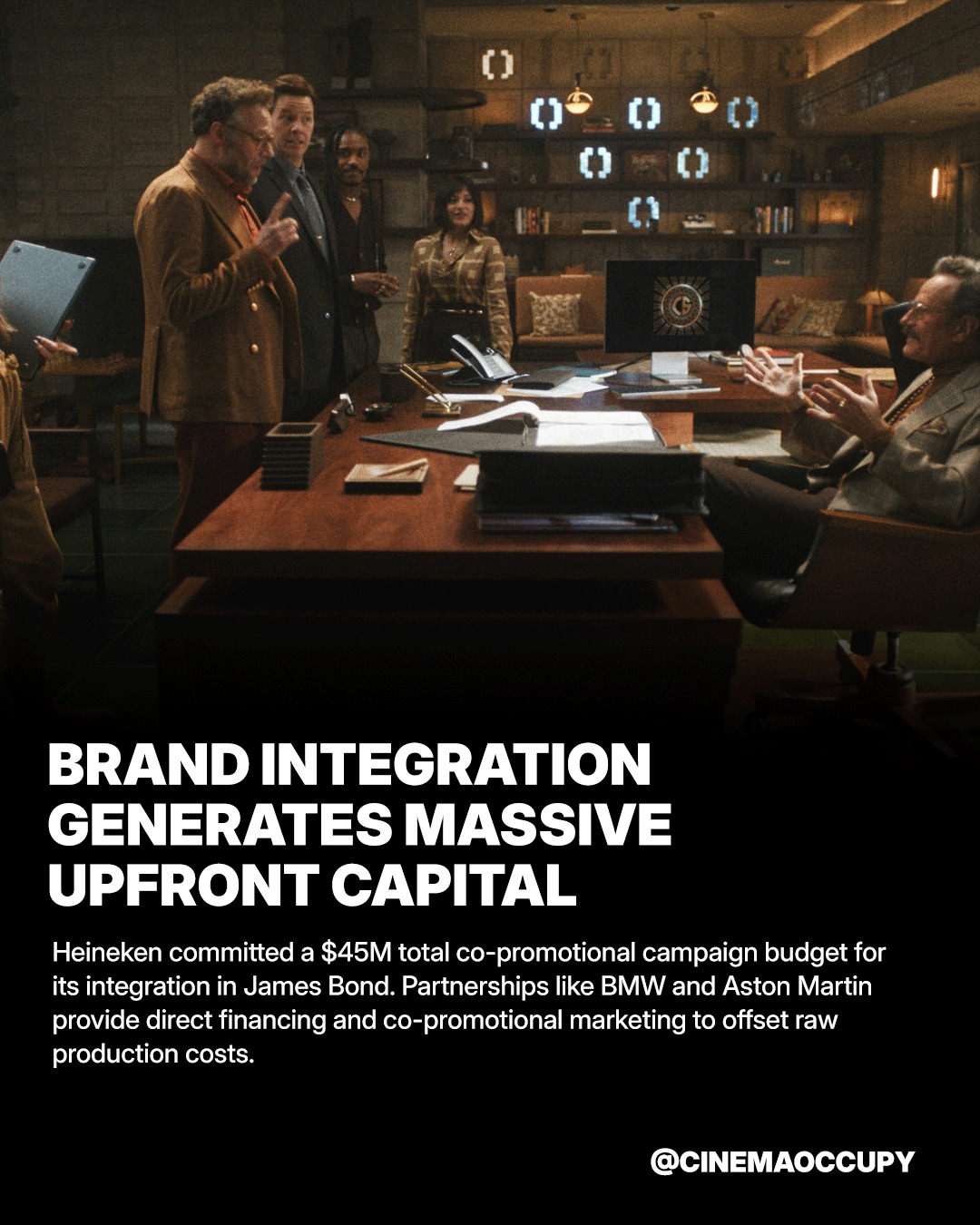
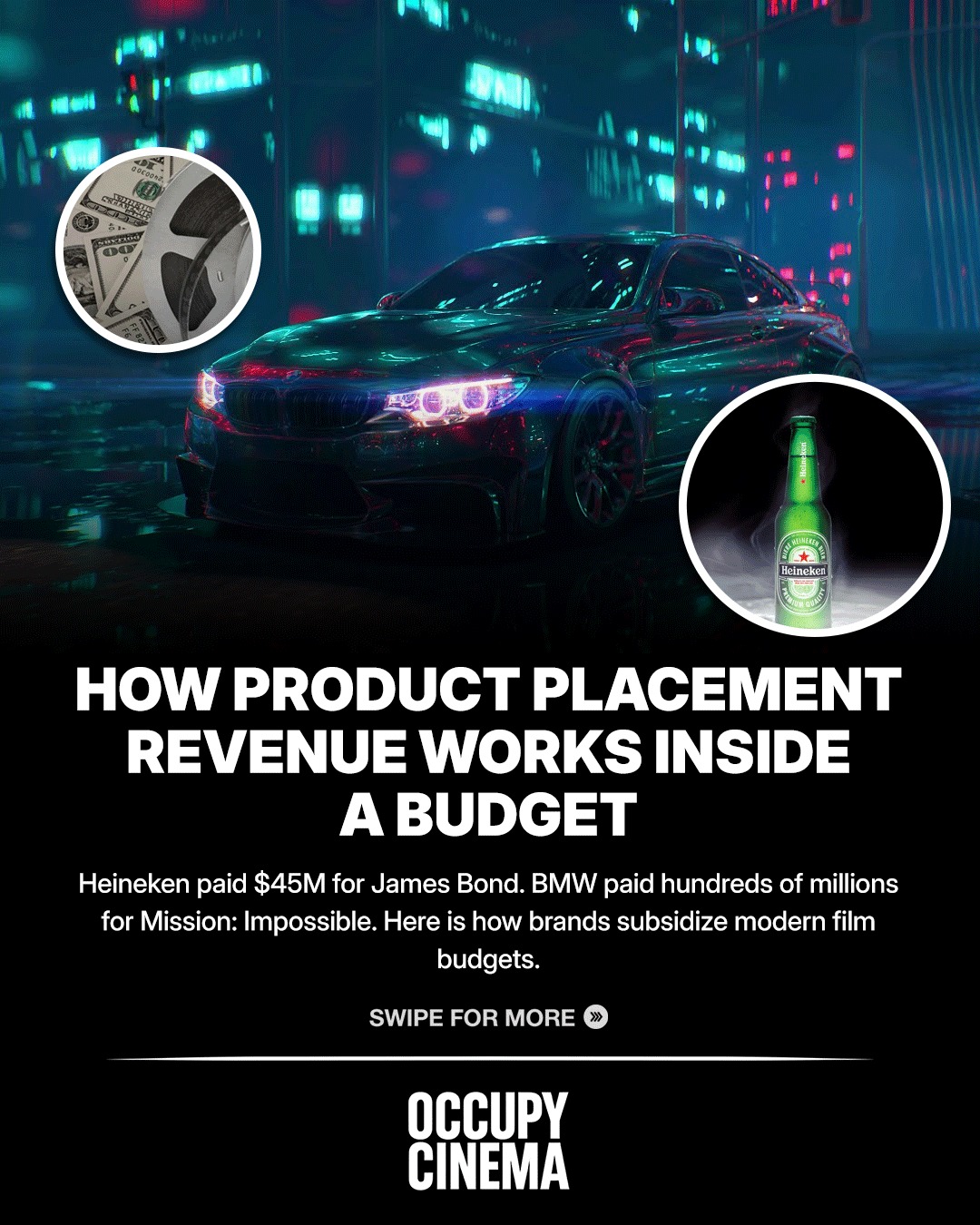
Consider the James Bond franchise, a series synonymous with luxury, gadgets, and global espionage. For decades, Bond films have showcased an array of high-end vehicles, timepieces, and spirits. It is widely reported that Heineken This figure, while substantial, pales in comparison to the valuations placed on automotive partnerships. BMW and These are not trivial sums, they are material injections into a film's budget that can significantly offset marketing expenditures or directly fund production elements.
The Economic Imperative of Integration
The motivation for studios and producers to engage in such partnerships is clear: financial viability. In an era of escalating production costs, where visual effects and star salaries consume ever-larger portions of a budget, alternative revenue streams are not merely beneficial, they are often essential. Product placement revenue effectively reduces the financial burden on the primary investors, allowing for greater creative ambition in other areas, or simply ensuring the film can be produced at its intended scale. This economic reality means that a brand's presence is not just an aesthetic choice, but a calculated financial maneuver.
From a filmmaking perspective, the inclusion of branded products inherently influences the visual language of a film. A specific car model, a particular smartphone, or a recognizable beverage bottle, whether intentionally highlighted or simply present in a scene, becomes part of the film's mise-en-scène. This can be a double-edged sword. When executed subtly, it can lend a sense of realism and contemporary authenticity. However, when overtly placed, it risks breaking the audience's immersion and drawing undue attention to the commercial aspect of the film. The delicate balance between authentic integration and overt advertisement is a constant challenge for filmmakers and marketing teams.
Beyond the Frame: Brand as Narrative Element
The relationship between brands and cinema extends beyond mere financial transactions. For certain properties, particularly those with a strong aspirational component like James Bond, the featured products become inextricably linked with the character's identity and the franchise's cachet. The cars Bond drives, the watches he wears, and even the drinks he consumes are as much a part of his persona as his tailored suits and dry wit. This symbiotic relationship elevates product placement beyond simple advertising, positioning it as an integral, albeit commercially driven, component of world-building. For instance, the collaboration between Christopher Nolan's Oppenheimer and IMAX was not a traditional product placement deal, but an intentional choice of format that became central to the film's marketing and visual strategy, demonstrating how technical partners can also become de facto brand integrations for discerning audiences. The use of Alexa 35 cameras or Panavision anamorphic lenses, while not consumer products, are 'placed' in the technical specifications, influencing the film's aesthetic and often appealing to a specific segment of the filmgoing public.
Ultimately, product placement has become a sophisticated financial instrument in Hollywood, underpinning the viability of high-budget productions. It is a testament to the evolving economic landscape of filmmaking, where commercial interests and artistic expression must often find a negotiated coexistence on screen.