Occupy Cinema › Exhibition
The Silent Sabotage of the Silver Screen: When Art Takes the Blame for Technical Failures
A decade ago, IndieWire brought to light a quiet betrayal happening in movie theaters, a systemic issue where the very art we cherish is unfairly judged due to faulty projection.
By Occupy Cinema ·
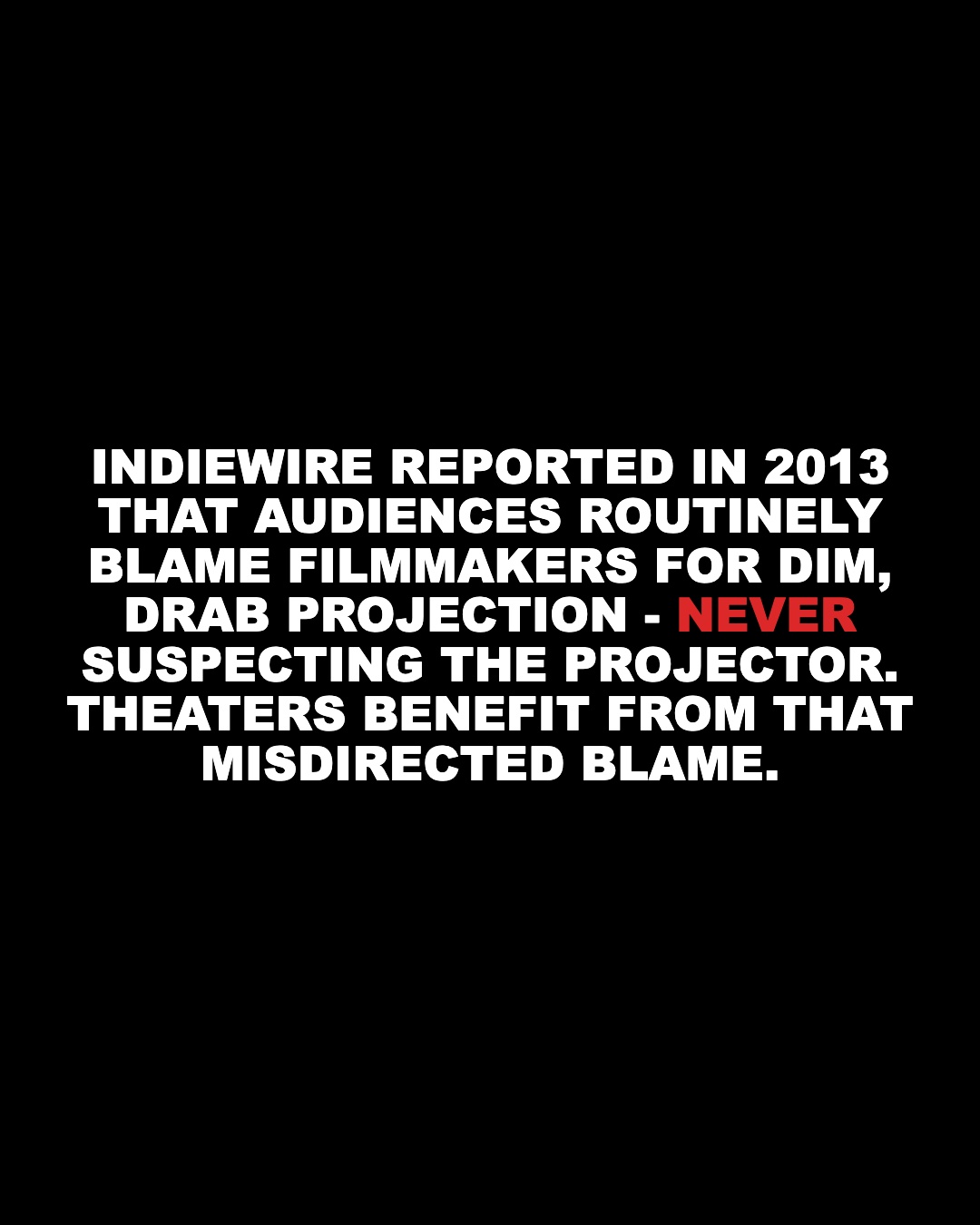
A faint flicker, a shadow that clings too heavily to the screen, a palette muted into an indifferent grey. These are the subtle aggressions against the cinematic experience, often attributed not to the mechanics of projection, but to the artistic choices of the filmmaker. It is a curious inversion, a sleight of hand performed in the dark, where the technical failings of a venue become the perceived deficiencies of a director's vision. This phenomenon, which IndieWire illuminated with poignant clarity over a decade ago, speaks to a deeper, more troubling dynamic within the film exhibition landscape.
The industry, it seems, has fostered an environment where the audience's critical gaze is deliberately misdirected. When a film appears too dark, too washed out, or tonally dissonant, the immediate reaction is often to question the director, the cinematographer, or the overall artistic intent. Rarely does the audience, lacking the specific framework of understanding exhibition standards, turn their attention to the projector bulb, the screen's calibration, or the maintenance protocols of the theater itself. This lack of informed scrutiny allows theater chains to operate with a degree of impunity, their technical shortcomings absorbed into the perception of the art itself.
The Unseen Mechanics of Perception
Consider the delicate interplay of light and shadow in a film by, for example, Roger Deakins, whose mastery of cinematography is legendary. His work on films like Blade Runner 2049 or The Shawshank Redemption is defined by its meticulous control of atmosphere and visual texture. When such a film is projected poorly, its carefully constructed world can crumble. The nuances of a character's expression, the subtle shifts in mood conveyed through lighting, or the grandeur of a landscape can be irrevocably diminished. The filmmaker, who has poured years into perfecting these visual elements, becomes an unwitting scapegoat for a system that benefits from this misattribution of blame.
This deliberate divergence of responsibility serves a clear purpose for the exhibition sector. If audiences were acutely aware of how much projection quality impacts their viewing experience, their demands for accountability would shift dramatically. Instead of debating the artistic merits of a dimly presented film, they would challenge the venue's technical standards. This sustained ignorance protects theater chains from the financial and operational pressures of maintaining optimal projection quality, allowing institutional failures to be conveniently re, categorized as artistic missteps.
Reclaiming the Viewer's Understanding
The solution, or at least a significant part of it, lies in education and awareness. Audiences need to be equipped with the knowledge that a cinematic experience is a collaborative effort, extending beyond the creative team to include the often, invisible hands of exhibition. Understanding that a poorly lit screen is not necessarily a directorial choice, but potentially a technical issue, empowers the viewer to demand better, to advocate for the integrity of the art form itself.
When we allow ourselves to blame the filmmaker for darkness that exists purely on the screen in front of us, we are, in essence, complicit in a system designed to evade scrutiny and accountability. It is a passive acceptance of diminished quality, a quiet agreement to let the true culprits remain unseen. True appreciation of cinema requires not only an engagement with the art but also an informed understanding of the entire chain of its delivery, from the director's vision to the projector's beam. Only then can the silver screen truly shine, unburdened by the shadows of misdirected blame.
Luna Greenwood, World and Arthouse, Occupy Cinema.
Related reading: Making Movies by Sidney Lumet, a master class on the craft of filmmaking.