Occupy Cinema › Box Office
How Julie Dash Rewrote Cinema History with 'Daughters of the Dust'
Decades before modern indie breakouts, Julie Dash redefined American visual storytelling with an uncompromising masterpiece that earned a permanent place in the global film canon.
By Occupy Cinema ·
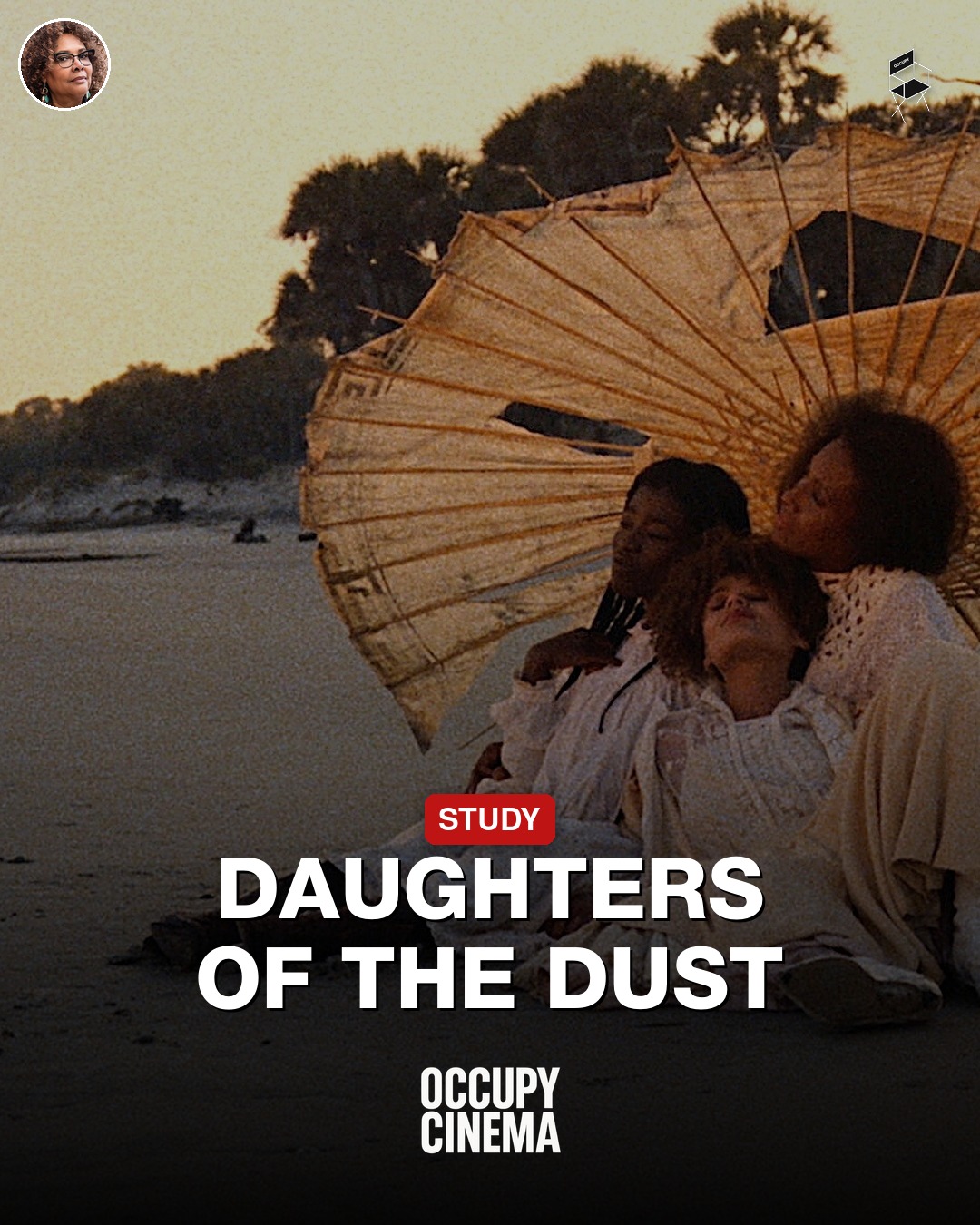
In 1991, Julie Dash accomplished what no Black American woman had ever done before. She secured a theatrical release in the United States for an independent feature film. Daughters of the Dust broke through Hollywood barriers without conforming to studio storytelling formulas. The film premiered at the Sundance Film Festival, where it immediately disrupted industry expectations. Kino International picked up distribution for a North American theatrical run that eventually grossed nearly $1.7 million. That was a landmark box office figure for an uncompromised, nonlinear art, house title in 1992.
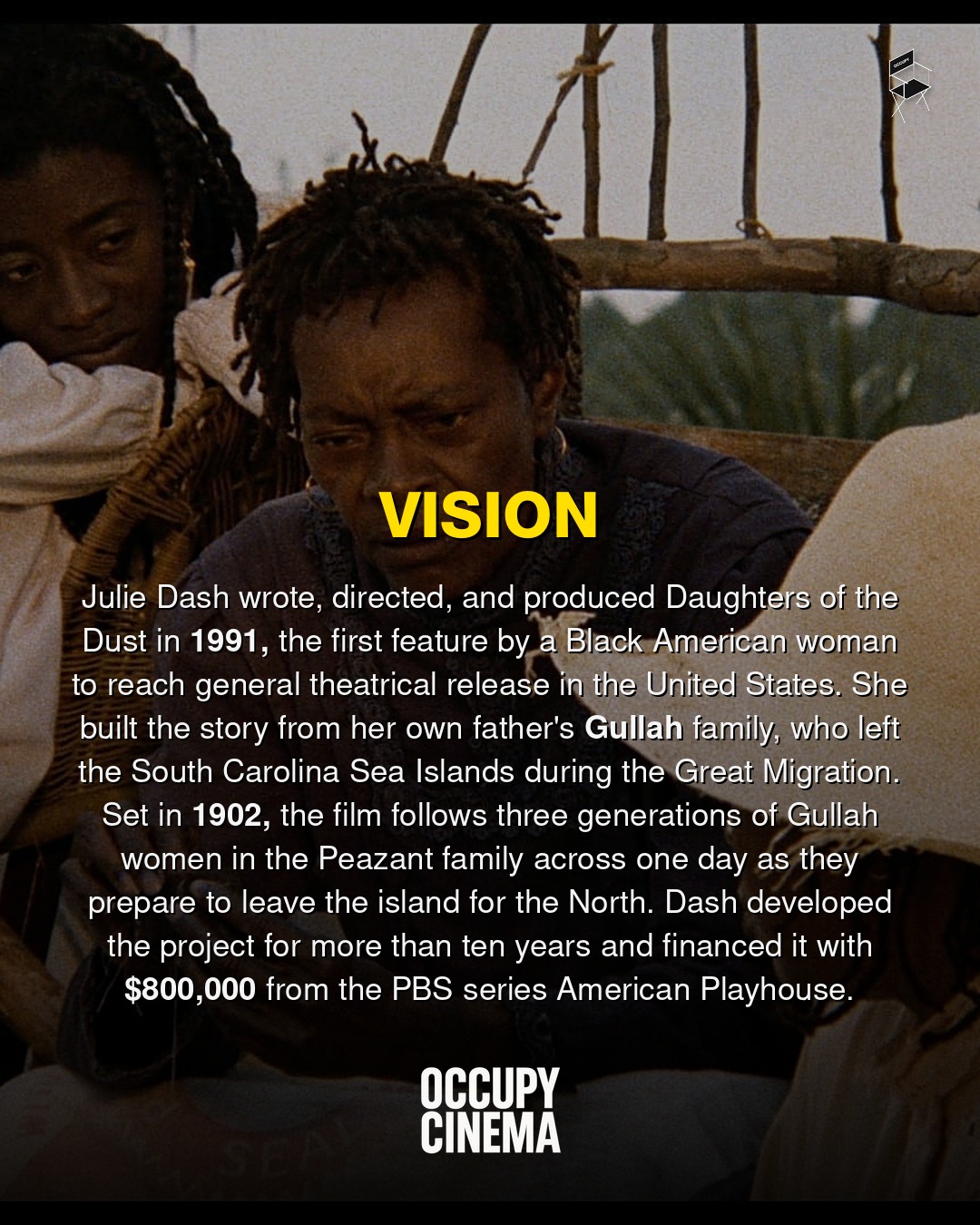
The narrative takes place in 1902 on St. Helena Island off the coast of South Carolina. Dash drew directly from her father's Gullah family heritage to build the world. The film follows three generations of the Peazant family across a single pivotal day. The family prepares to migrate to the Northern mainland, leaving behind their sea island traditions and deep West African roots. Dash structured the narrative circularly rather than relying on standard three, act mechanics. An unborn child provides the omniscient narration, bridging past trauma with future generations. The dialogue unfolds in rich Gullah Creole without heavy subtitle reliance, forcing audiences to absorb the storytelling through rhythm, tone, and visual context.
Visual Language and Legendary Craft
The visual framework of Daughters of the Dust altered the landscape of American independent cinematography. Director of photography Arthur Jafa shot the film on 35mm stock, utilizing slow motion and natural lighting to turn the low country coast into a vivid, breathing canvas. His extraordinary camera work earned the Excellence in Cinematography Award at Sundance. Jafa collaborated closely with celebrated painter Kerry James Marshall, who served as the film's production designer. Marshall infused the sets, props, and period costumes with subtle historic detail, creating an aesthetic that felt both grounded in history and completely timeless.
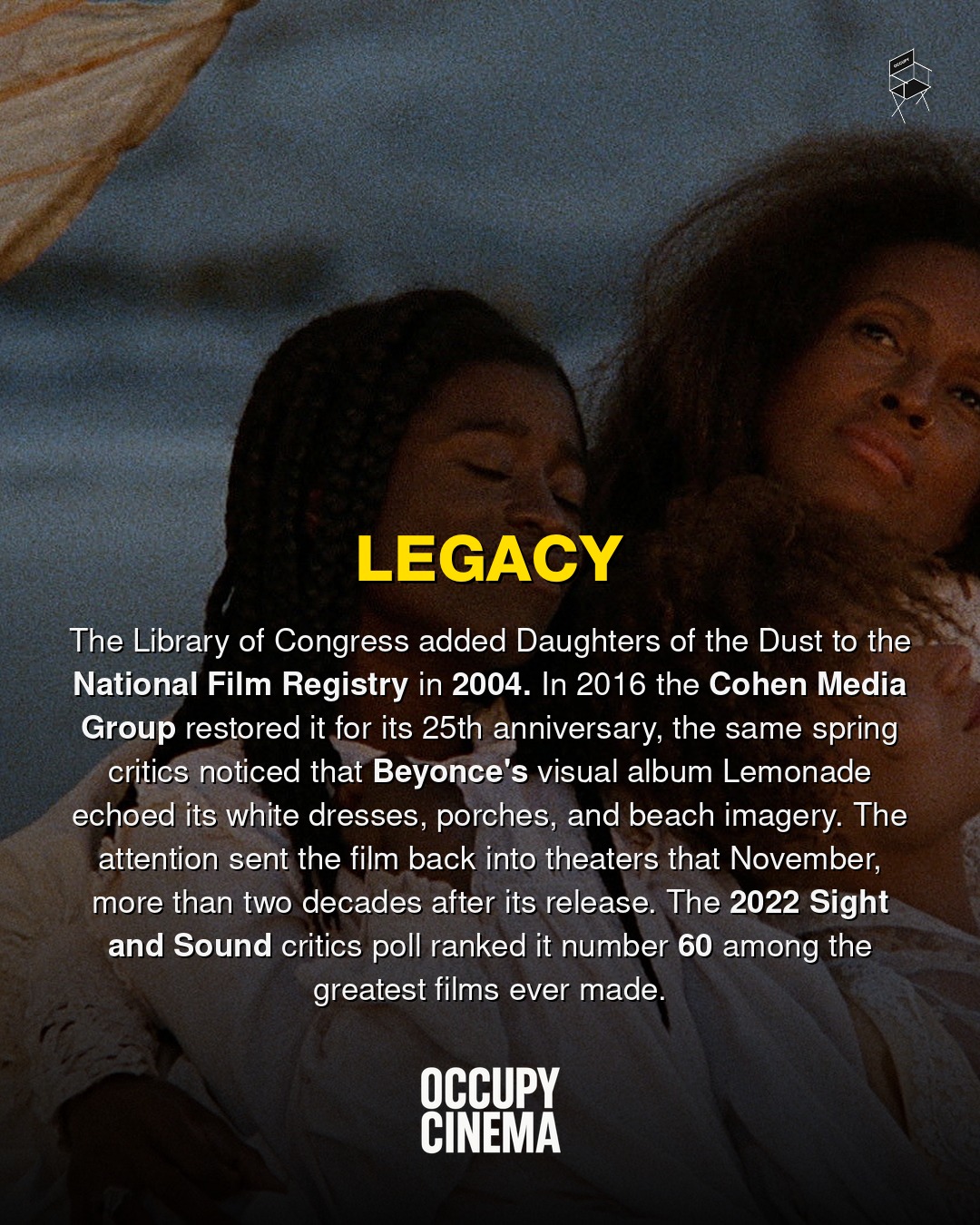
The film's path to universal canonization required patience from an industry slow to recognize its magnitude. In 2004, the Library of Congress selected Daughters of the Dust for preservation in the National Film Registry. A crucial second life arrived in 2016 when Cohen Media Group financed a meticulous 4K digital restoration. That same year, pop icon Beyoncé released her visual album Lemonade, directly referencing Dash's aesthetic, white lace dresses, low country water landscapes, and matriarchal gatherings. The high profile homage sent a new generation of viewers hunting for Dash's original work, as detailed in coverage by IndieWire at the time.
Critical Canon and Lasting Industry Impact
By 2022, international critical consensus officially caught up with what film scholars had argued for decades. The decennial critics poll conducted by Sight and Sound magazine ranked Daughters of the Dust at number 90 on its definitive list of the greatest films ever made. It marked a historic inclusion for an African American female director, cementing Dash's status alongside international auteur giants.
The commercial and artistic legacy of Daughters of the Dust is not merely a story about groundbreaking firsts. It is a masterclass in creative independence and cultural preservation. Dash built an enduring cinematic vocabulary outside the traditional studio pipeline, relying on oral history, painterly composition, and non, Western narrative rhythm. Decades later, her single day on St. Helena Island remains a vital touchstone for modern visual culture.



Related reading: The Filmmaker's Eye.