Occupy Cinema › Development
Salman Rushdie on AI, Originality, and the Limits of Algorithmic Storytelling
In an uncompromising critique of creative automation, author Salman Rushdie argues that AI is structurally incapable of artistic originality while teasing new screen adaptations of his work.
By Occupy Cinema ·
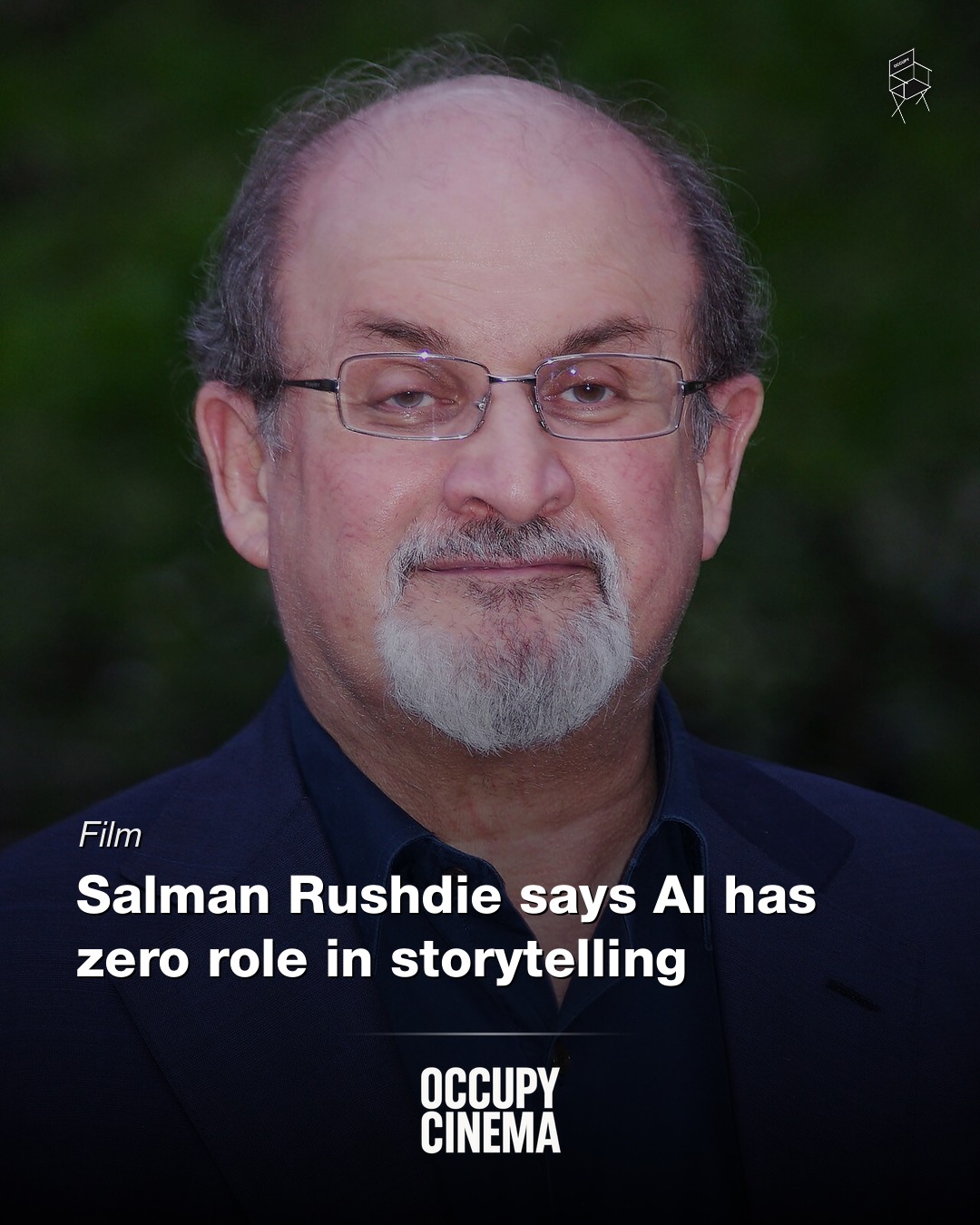
Generative artificial intelligence continues to sweep through Hollywood development departments and publishing houses, promising streamlined script analysis, automated outline generation, and synthetic ideation. Yet, when confronted with the fundamental question of what role AI should occupy in the creative process, author Salman Rushdie offered an absolute dismissal: "Nothing. Zero." Spoken ahead of Liberatum's 14th Cultural Honor ceremony in London, as detailed in a July 8, 2026 Variety exclusive, Rushdie's insistence cuts through the current industry frenzy. For an entertainment business agonizing over automated writers rooms and machine generated art, his position is not merely a complaint about modern software. It stands as a precise definition of human narrative art.
The core of Rushdie's argument rests on a structural reality that technological advocates routinely obscure. Generative language models operate through probabilistic synthesis, analyzing vast databases of existing material to predict the most statistically likely next word or narrative beat. By definition, a system trained entirely on historical output can only reconfigure past iterations. It lacks the capacity for genuine artistic originality, or what can be termed structural first, ness. Art achieves enduring significance precisely when it departs from established precedent, introducing perspectives, syntax, and emotional terrain that no existing dataset could have anticipated. Algorithmic tools can imitate structure and mimic tone, but they are inherently incapable of generating the unprecedented.
Coming from a novelist who spent decades navigating severe geopolitical pressure and political censorship for his writing, this critique carries profound weight. Rushdie's body of work has always relied on hyper, specific cultural synthesis, magical realism, and personal historical perspective that defy automated formulas. His revelation regarding active screen projects, including a television adaptation of his Booker Prize winning novel Midnight's Children and a feature film adaptation of The Ground Beneath Her Feet, underscores the lasting value of singular literary vision in a cinematic landscape often starved for authentic intellectual property.
The Illusion of Synthesis and the Demand for Creative Risk
Translating Rushdie's dense, sprawling prose to audiovisual media has historically demanded immense creative ambition. Director Deepa Mehta's 2012 film adaptation of Midnight's Children required navigating intricate political pushback and complex production logistics, proving that vital narrative art generates real cultural friction precisely because it engages with volatile human truths. Today, legacy studios frequently view generative tools as a potential hedge against production risks, hoping synthetic systems can yield reliable content without the friction of auteur driven development. However, this pursuit of mechanical efficiency fundamentally misunderstands why audiences connect with cinema in the first place.
The wider film industry is currently wrestling with these structural questions across union contracts, visual effects workflows, and executive suites. While automated systems can construct conventional three act structures based on thousands of historic screenplays, they cannot experience grief, displacement, romance, or mortal fear. A machine cannot feel the impulse to break a conventional narrative rule because a unique historical moment demands a brand new form of expression. Algorithmic generation offers mathematical predictability, but cinema relies on the unpredictable spark of human perception.
Rushdie's refusal to grant artificial intelligence a foothold in creative labor provides a vital reminder for filmmakers, screenwriters, and studio leaders alike. Storytelling is not an optimization problem waiting to be solved by efficient computational models. It is an intentional, risky leap into uncharted creative territory, executed by individuals willing to give shape to the unseen. As new adaptations of his iconic literature move toward production, the film business would do well to remember that automated consensus produces only static noise, while true cultural impact demands the courage of absolute originality.
Related reading: The American Cinema.