Occupy Cinema › Exhibition
Sony in Talks to Reopen the Iconic Cinerama Dome and Hollywood Multiplex
Four years after shuttering during the pandemic, the historic Sunset Boulevard venue could return as Sony Pictures negotiates to acquire and revive the legendary Cinerama Dome.
By Occupy Cinema ·
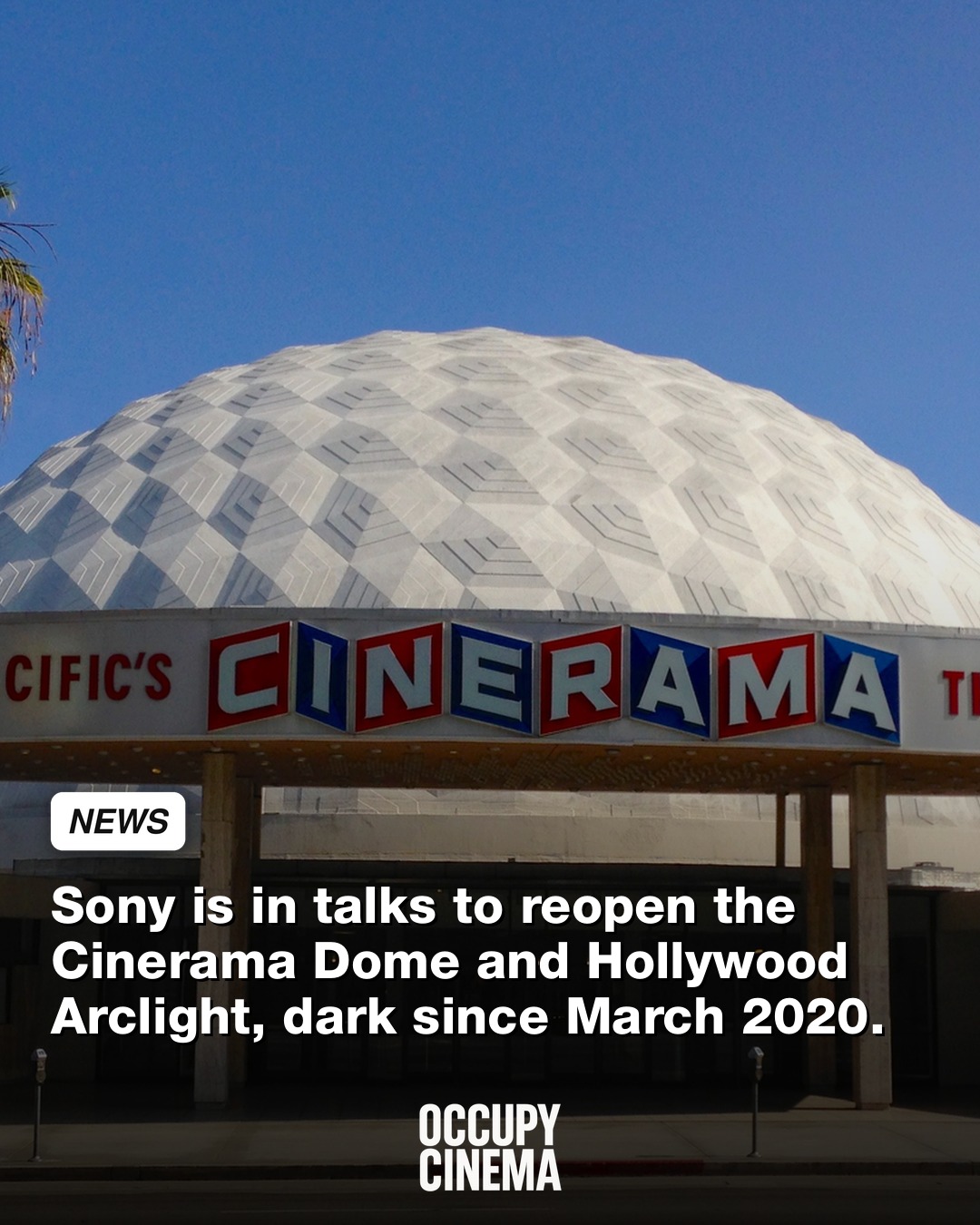
When COVID, 19 forced movie theaters across the globe to darken their auditoriums in March 2020, few closures hit the cultural heart of Los Angeles quite like the shutdown of the ArcLight Hollywood and its crown jewel, the Cinerama Dome. For four long years, the iconic Sunset Boulevard complex has stood silent, serving as a solemn monument to the volatile state of modern theatrical exhibition. Now, a major Hollywood studio may finally be stepping up to turn the marquee lights back on. Reports indicate that Sony Pictures is currently in preliminary negotiations with the Robertson Property Group to lease and operate the legendary venue. While details remain fluid and an official reopening timeline has not been established, the prospect of Sony taking over the property represents a monumental shift in how legacy studios view brick, and, mortar exhibition in the post, streaming era.
To understand why this prospective acquisition matters, one must grasp the sheer commercial and cultural gravity that the Sunset Boulevard multiplex held prior to its sudden demise. Before the pandemic crippled exhibition, the ArcLight Hollywood was not merely a local favorite; it was routinely one of the ten highest, grossing multiplexes in the entire United States on any given weekend. Filmmakers, industry executives, and casual moviegoers flocked to its pristine projection booths, reserved seating, and strict presentation standards. It operated as a cathedral for cinema where opening weekend grosses carried genuine weight in trade reports. When parent company Decurion Corporation announced in April 2021 that it would not reopen its theater locations and subsequently entered Chapter 7 bankruptcy proceedings, the news sent shockwaves through the creative community. Under the terms of those bankruptcy filings, the beloved ArcLight brand name itself cannot be attached to the venue, meaning a new operator must forge a fresh identity while honoring the location's rich lineage.
At the core of the complex stands the Cinerama Dome, a marvel of mid, century architectural ambition and engineering craft. Constructed over a rapid sixteen, week period in 1963, the building was specifically designed to host the world premiere of director Stanley Kramer's star, studded comedy It's a Mad, Mad, Mad, Mad World. Engineered using the geodesic dome principles pioneered by Buckminster Fuller, it remains the only concrete geodesic dome ever built on Earth. Composed of 316 prefabricated pentagonal and hexagonal concrete panels, the structure was tailored to accommodate the massive curved screen required for three, strip Cinerama and 70mm projection formats. Over the decades, the Dome became an indelible fixture of Hollywood iconography, earning historical monument status from the City of Los Angeles and even starring as its younger self in Quentin Tarantino's 2019 nostalgic masterpiece, Once Upon a Time in Hollywood.
A New Studio Era for Historical Exhibition
Sony's interest in the venue comes at a fascinating inflection point for the motion picture industry. Following the federal repeal of the Paramount Decrees in 2020, studios are legally permitted to own and operate first, run movie theaters once again, a practice that was strictly prohibited for over seven decades to prevent anti, competitive monopolization. Sony has already demonstrated a keen desire to capitalize on this regulatory change, having acquired the Alamo Drafthouse cinema chain in 2024. By setting its sights on the Cinerama Dome and its adjacent multiplex, Sony is positioning itself as a primary custodian of high, end, communal moviegoing experiences. Operating a flagship venue on Sunset Boulevard would afford the studio a prestigious platform for red, carpet premieres, specialty 70mm archival runs, and exclusive event releases that directly engage cinephile culture.
The potential revival of the Dome is more than just a real estate transaction; it is a vital test case for the endurance of physical cinema culture in an era dominated by home viewing. The loss of premier venues capable of showcasing large, format celluloid prints left a noticeable void in Los Angeles, forcing film festivals and directors to scramble for alternative screening venues equipped for historic formats. If Sony successfully concludes its negotiations with the Robertson Property Group and restores the venue to its former glory, it will send a resounding message to the rest of the entertainment industry. Preserving communal spaces dedicated to the highest standards of visual and auditory craft is not a charity project, but a necessary investment in the long, term health of the cinematic medium itself.
Related reading: On Filmmaking.