Occupy Cinema › Film News
The Enduring Echoes of Charles Burnett's Killer of Sheep
Charles Burnett's 1978 masterpiece, Killer of Sheep, a film born from the vibrant, often turbulent, streets of Watts, continues to resonate through cinema history, a testament to its raw authenticity and the enduring power of its vision.
By Occupy Cinema ·
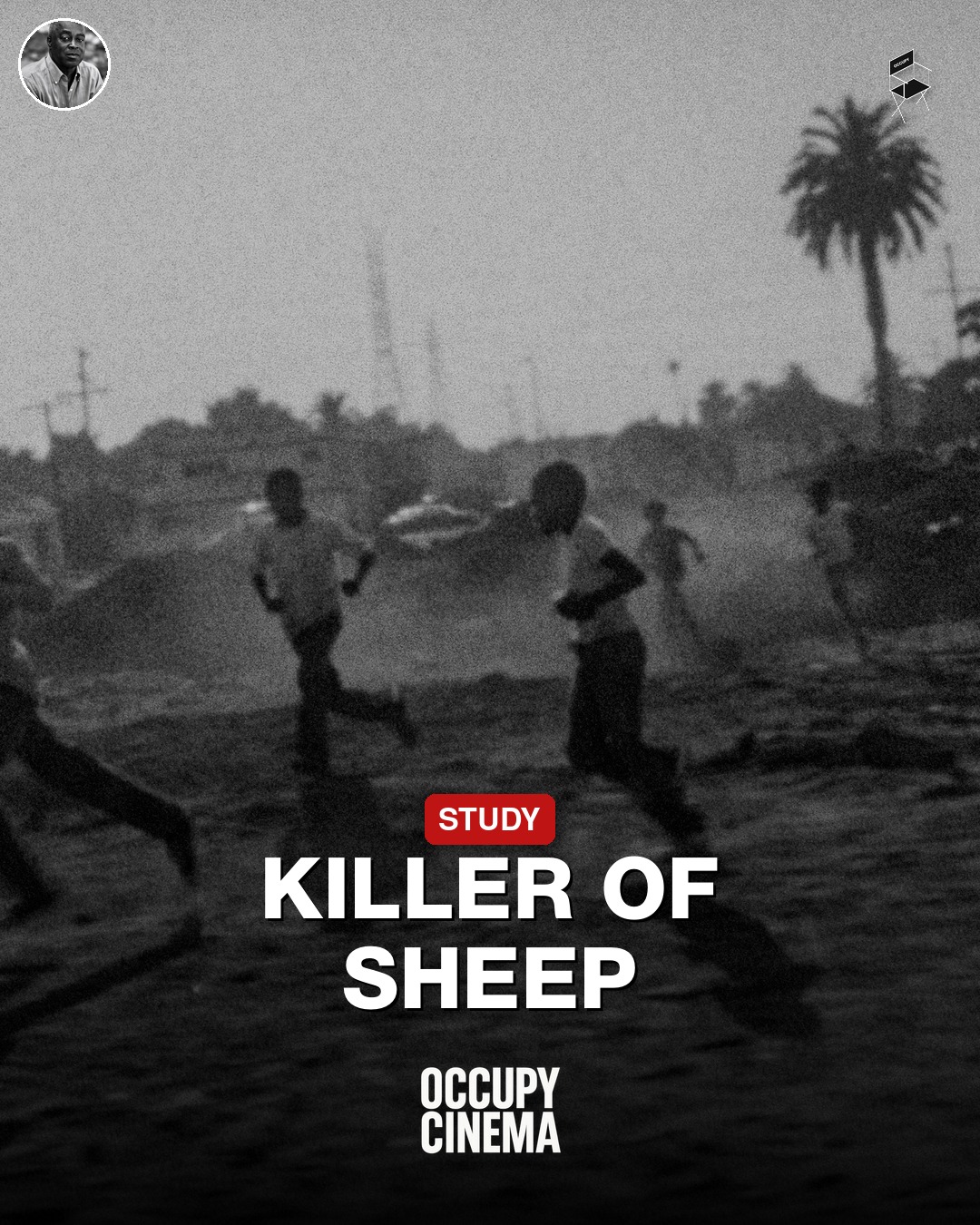
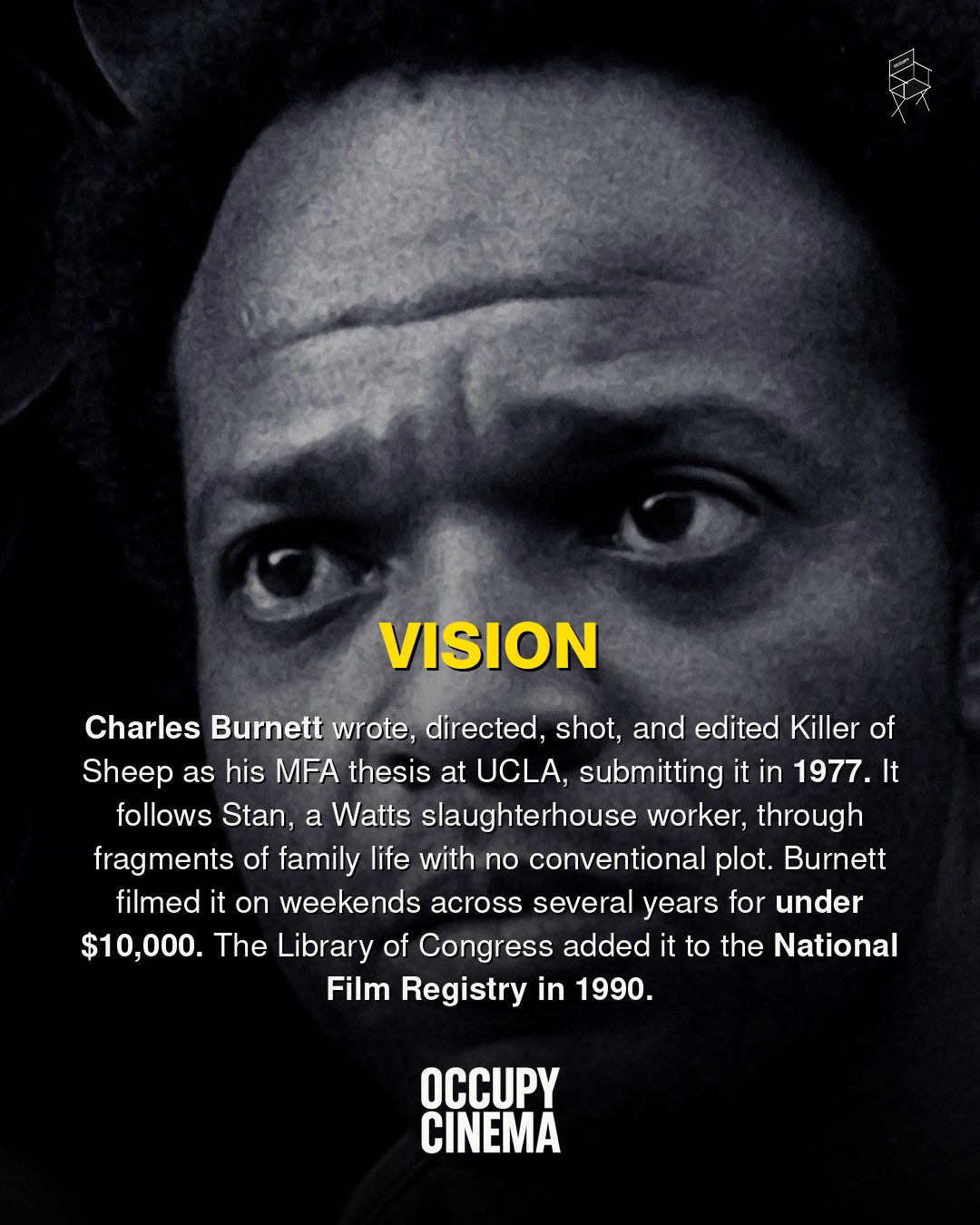
A child, suspended in a moment of pure, unadulterated joy, spins in an empty field, a whirl of motion against the stark backdrop of a working-class Los Angeles neighborhood. This image, at once fleeting and indelible, is one among countless others that flicker through Charles Burnett's Killer of Sheep, a film that feels less like a narrative and more like a collection of remembered breaths, fragments of lives lived with quiet dignity and profound struggle. Originally conceived as his UCLA film school thesis, completed in 1977, Burnett crafted this cinematic poem over several years, working exclusively on weekends, an act of sheer will and artistic dedication.
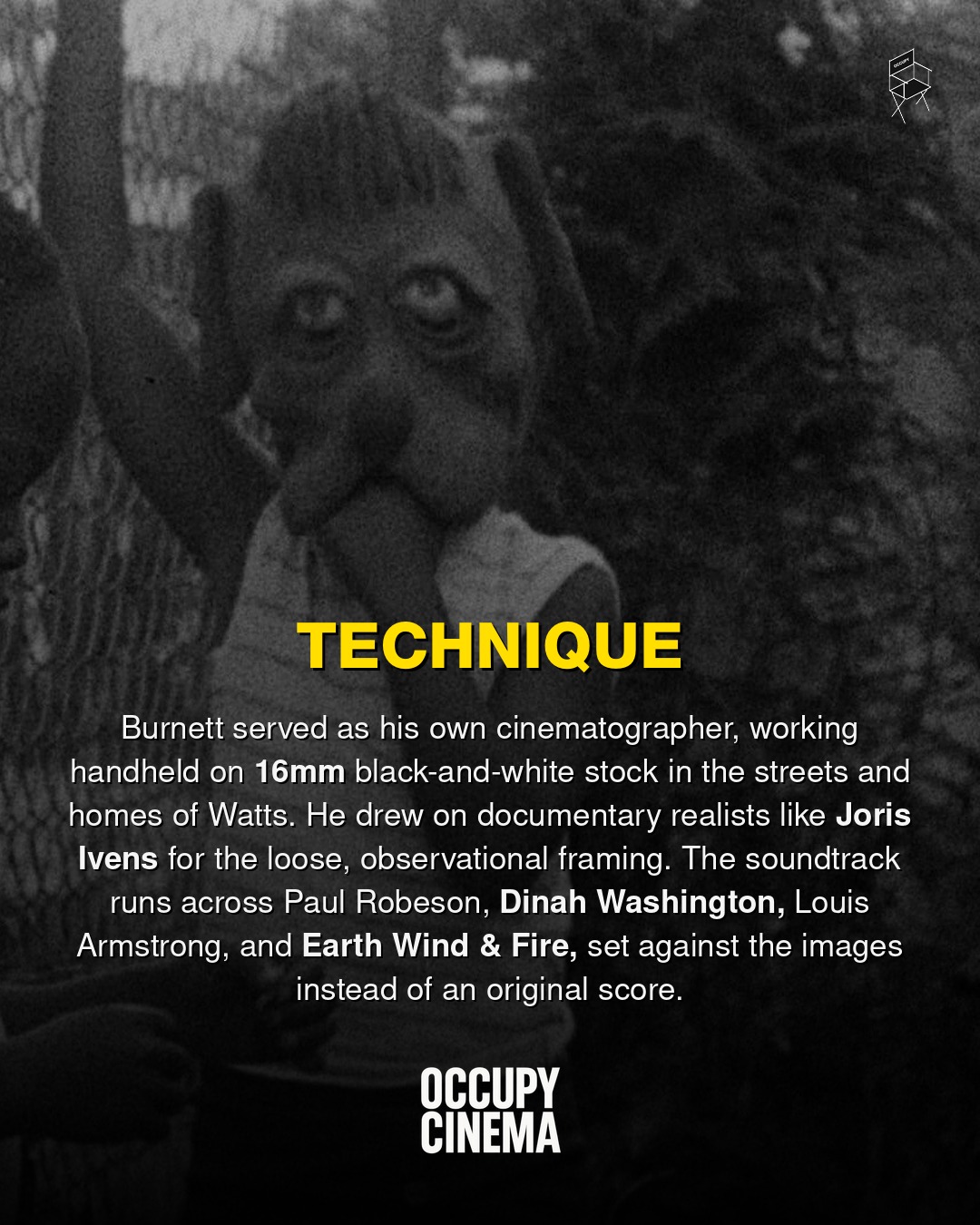
The film unfurls in the Watts neighborhood, the very landscape of Burnett's own upbringing, imbued with an intimate understanding of its textures and rhythms. Shot handheld on grainy 16mm black and white stock, it possesses a documentary-like immediacy, a stylistic choice that nods to masters like Joris Ivens. We follow Stan, a slaughterhouse worker, through the minutiae of his days, his weariness palpable, his connection to his family a fragile, precious thread. The faces in this film, largely unknown actors, are etched with a truth that transcends performance, each glance and gesture speaking volumes.
A Symphony of Silences and Sounds
For decades, Killer of Sheep remained largely unseen, a hidden gem tucked away in the annals of cinema history. The reason was both simple and complex: the film's rich, evocative soundtrack, featuring a pantheon of musical giants such as Paul Robeson, Dinah Washington, Louis Armstrong, and Earth Wind & Fire, had not been cleared for commercial distribution. This oversight, understandable for a student film made on a shoestring budget of under $10,000, inadvertently kept Burnett's vision from a wider audience.
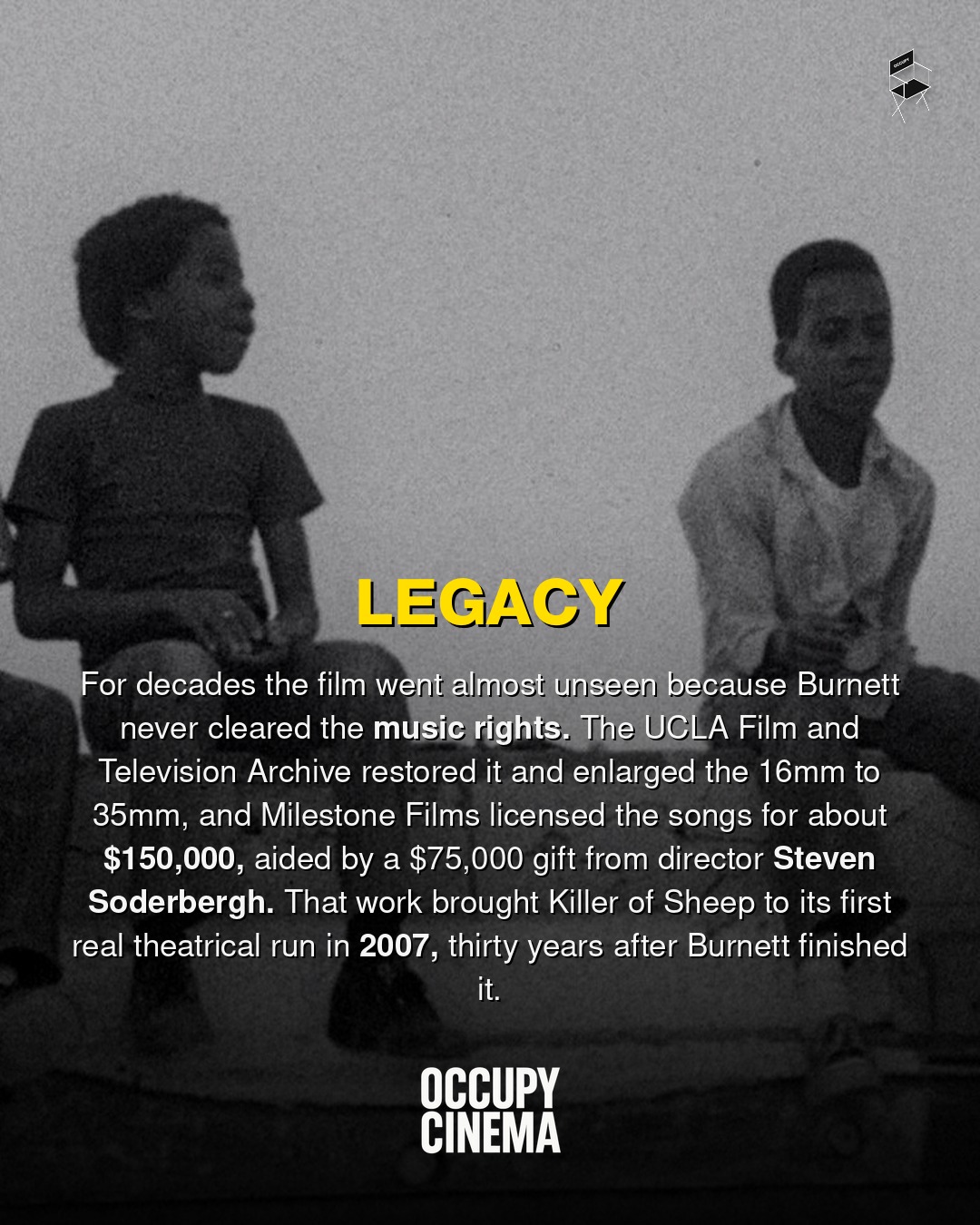
The tide turned thanks to a monumental effort. The UCLA Film and Television Archive undertook the painstaking task of restoring the film, blowing it up to 35mm, preserving its textural beauty. Then, Milestone Films stepped in, dedicating approximately $150,000 to license the music rights, a significant financial undertaking, generously bolstered by a $75,000 donation from director Steven Soderbergh. This collective endeavor finally paved the way for Killer of Sheep's first commercial theatrical release in 2007, nearly thirty years after its creation. Its importance had already been recognized by the Library of Congress, which inducted it into the National Film Registry in 1990, securing its place in America's cinematic heritage. For more on the film's restoration, you can read this piece from Deadline Hollywood.
The Unfolding Legacy
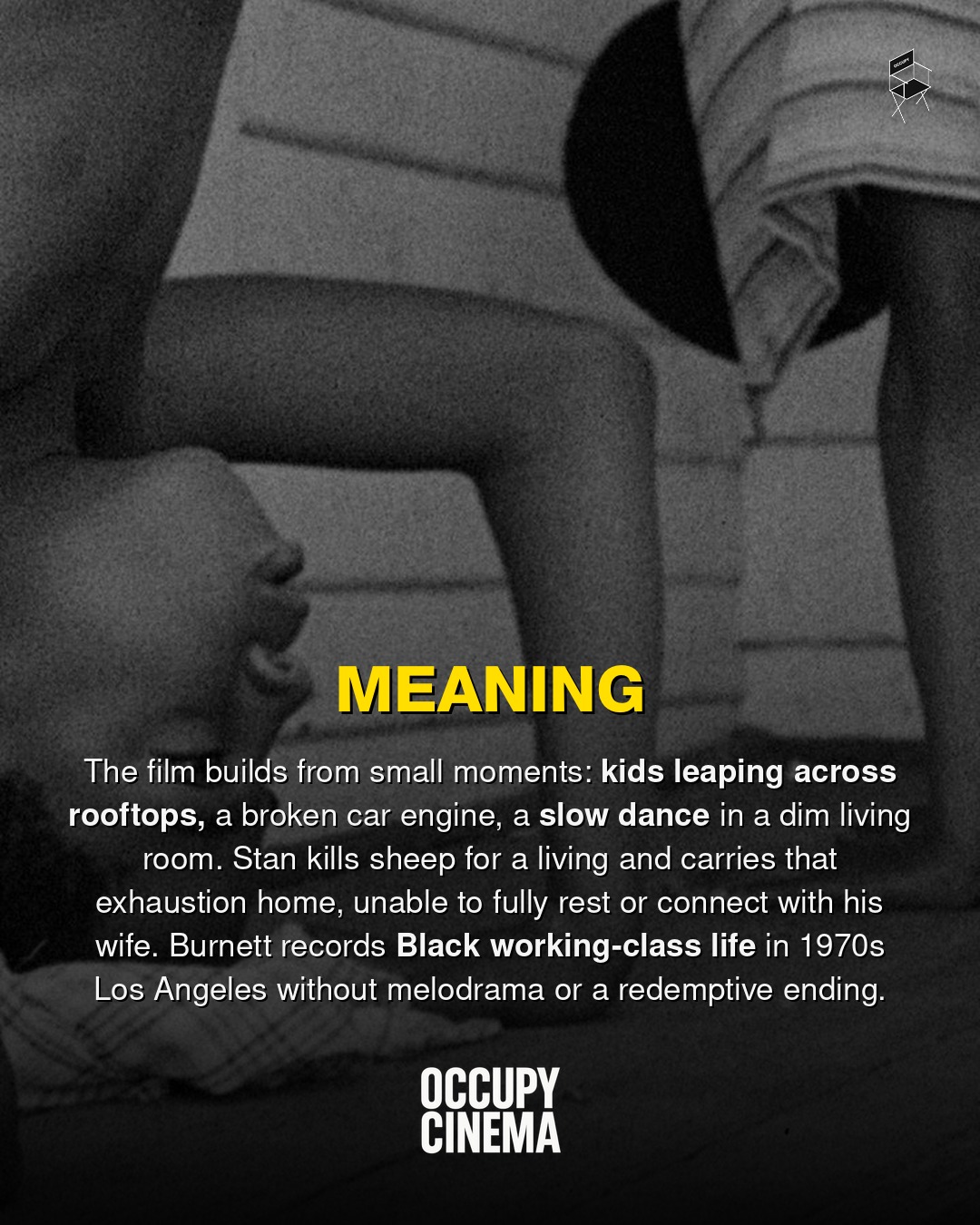
Watching Killer of Sheep today, one is struck by its timelessness. It is a film that defies easy categorization, weaving together elements of neorealism, documentary, and a deeply personal ethnography. It is a quiet rebellion against narrative conventions, choosing instead to immerse the viewer in the lived experience, in the small moments that define existence. The film asks us to observe, to feel the weight of Stan's world, to witness the resilience of a family in circumstances that are both ordinary and profoundly challenging. It is a powerful example of the L.A. Rebellion, a movement of Black filmmakers who emerged from UCLA in the late 1960s and 1970s, challenging dominant Hollywood narratives with their own authentic voices and perspectives. The Guardian has also reflected on its enduring impact.
The film leaves an indelible mark, not through grand pronouncements, but through its accumulation of intimate details: the clatter of machinery at the slaughterhouse, the tender touch between a husband and wife, the spontaneous games of children in alleyways. Which scene, one might wonder, would linger the longest after the credits roll, a ghost of memory in the quiet aftermath of the screen?