Occupy Cinema › People
Karlovy Vary Opens with Documentary: A Strategic Programming Choice
The 60th Karlovy Vary International Film Festival commenced with a documentary, 'The Match,' marking a notable departure from traditional narrative feature openings for a major festival.
By Occupy Cinema ·
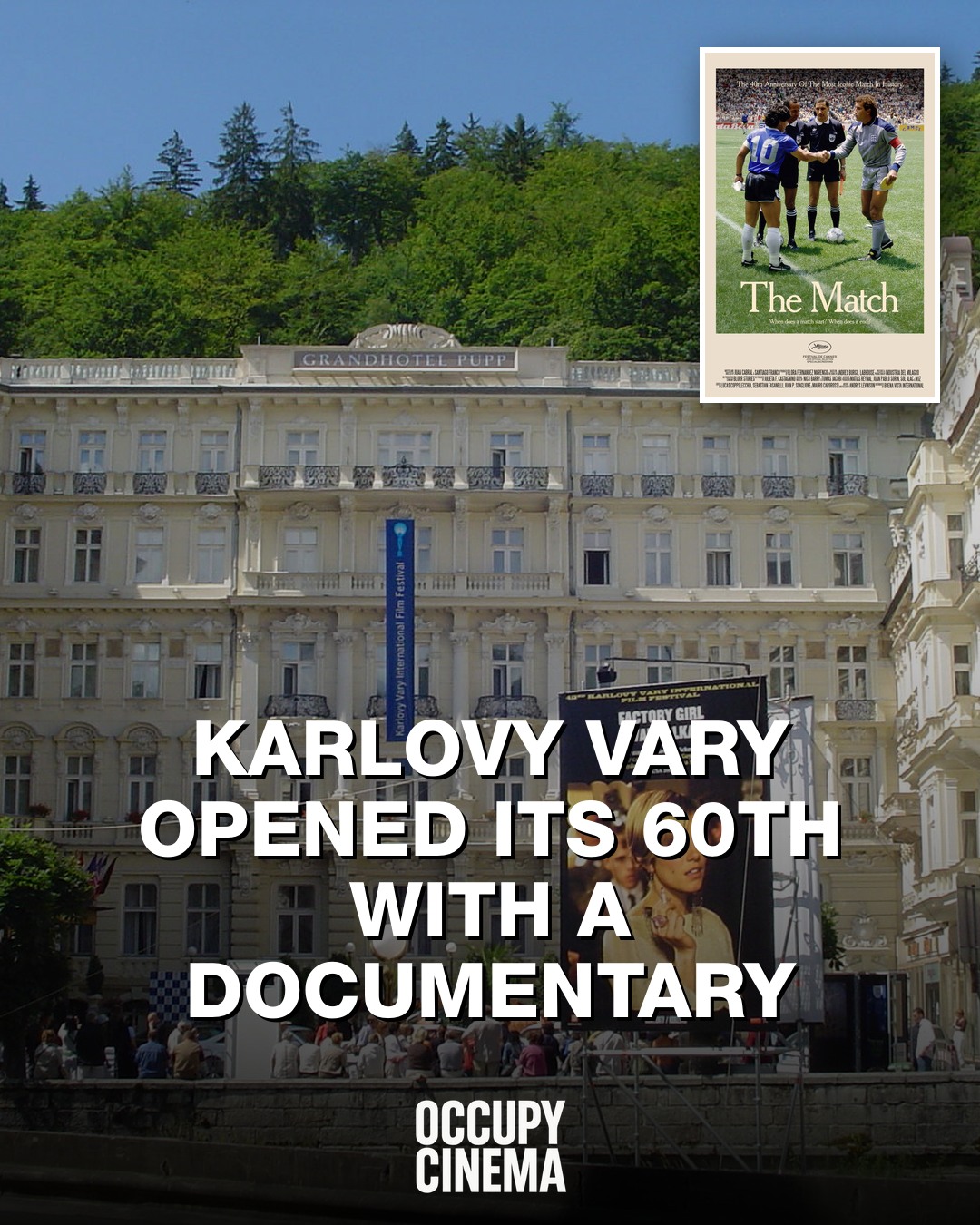
The 60th Karlovy Vary International Film Festival, or KVIFF, initiated its proceedings on July 3, 2026, with the Argentine and Spanish documentary, The Match. Directed by Juan Cabral and Santiago Franco, the film chronicles the 1986 World Cup quarterfinal between Argentina and England. This selection represents a distinct programming choice for a festival of KVIFF's stature, as opening night slots are typically reserved for high-profile narrative features with substantial star presence.
Karlovy Vary, established in 1946, holds a position among the world's most enduring film festivals. Its programming history reflects a consistent dedication to showcasing filmmakers whose voices may be suppressed in their home countries, a commitment exemplified by its prior support for figures such as Jafar Panahi. The 2026 iteration, running until July 11, continues this tradition, featuring a slate that includes both dissident and emerging directorial talents within its competitive sections.
The Strategic Implications of a Documentary Opening
The decision to open with a documentary, particularly one focused on a historical sporting event, signals a deliberate curatorial strategy. Major festivals often utilize their opening night gala to generate significant media attention and industry buzz, frequently through a star-driven fictional work that can attract both critical review and public interest. Opting for a documentary like The Match, which while thematically resonant, does not inherently possess the typical commercial draw of a narrative premiere, suggests a prioritization of thematic depth or artistic statement over conventional spectacle. This approach can underscore a festival's artistic independence and its commitment to diverse forms of cinematic expression. It also frames the festival's identity around significant storytelling, regardless of format, potentially attracting a different kind of critical discourse.
Historically, documentary film has gained increasing prominence within mainstream festival circuits, moving beyond dedicated documentary festivals to occupy more central roles in general programming. The technical sophistication of modern documentary filmmaking, often utilizing high-resolution digital cameras such as the ARRI Alexa 35 or RED V-RAPTOR, allows for production values that rival narrative features. Furthermore, the global appeal of specific historical events, such as the 1986 World Cup, can provide a universal entry point for audiences, even without the presence of traditional film stars. This particular match, for example, is renowned for its iconic moments, including Diego Maradona's "Hand of God" goal and his subsequent solo effort, widely considered one of the greatest goals in football history. These elements provide a strong narrative backbone for a documentary, even within a non-fiction context.
Karlovy Vary's Enduring Vision
KVIFF's long-standing tradition of fostering international voices, especially those from challenging geopolitical contexts, reinforces its position as a significant cultural institution. The festival's programming choices, including this year's emphasis on dissident and debut filmmakers, align with its historical mission. This commitment ensures a platform for cinematic works that might otherwise struggle for international exposure, echoing the festival's historical support for figures like Panahi, whose films often explore social commentary within restrictive environments. The festival's robust competitive sections continue to serve as a launchpad for new talent and provide a critical forum for films that address complex global issues. Variety and Deadline often track how festivals like KVIFF balance artistic ambition with industry demands, and Karlovy Vary consistently prioritizes the former. By spotlighting films that resonate beyond their immediate commercial viability, KVIFF reinforces its identity as a vital hub for world cinema, cultivating an environment where cinematic artistry and critical discourse can thrive.