Occupy Cinema › Film News
The Unscripted Agony of Willard: A Testament to Raw Cinema
Martin Sheen's visceral breakdown in the opening of Francis Ford Coppola's "Apocalypse Now" was not a planned act but a raw, unscripted moment of cinematic history, forever etched into the film's profound narrative.
By Occupy Cinema ·
A bead of sweat, then another, tracing paths down a face already slick with the tropical humidity of Saigon. The air, thick and heavy, hums with the distant thrum of unseen helicopters and the closer, more immediate sound of a man unraveling. This is the aperture through which we enter the fever dream of Apocalypse Now, a moment of such raw, unvarnished humanity that it feels less like cinema and more like a stolen glance into a tormented soul. Yet, this iconic scene, etched into the collective memory of film lovers, was never truly written.
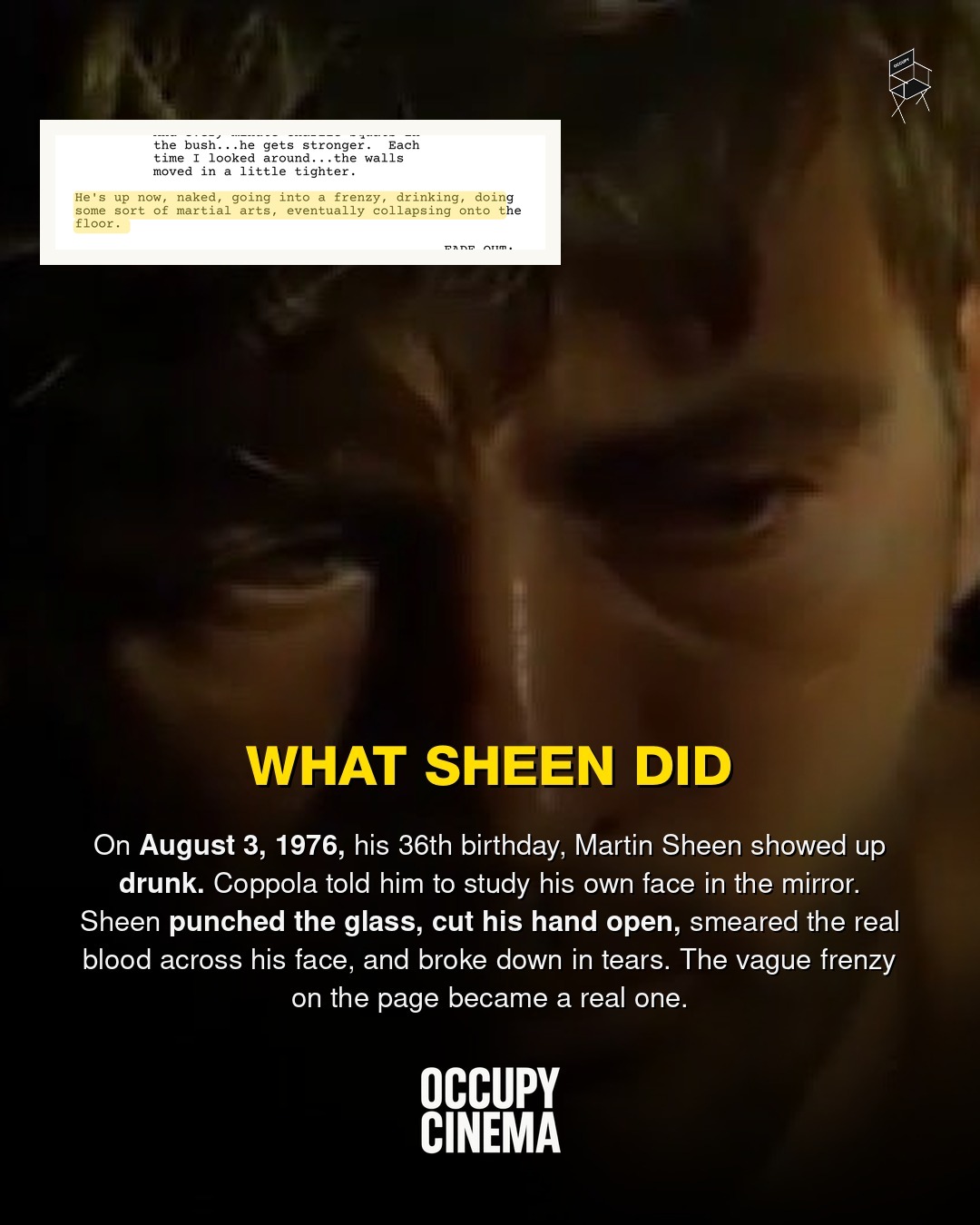
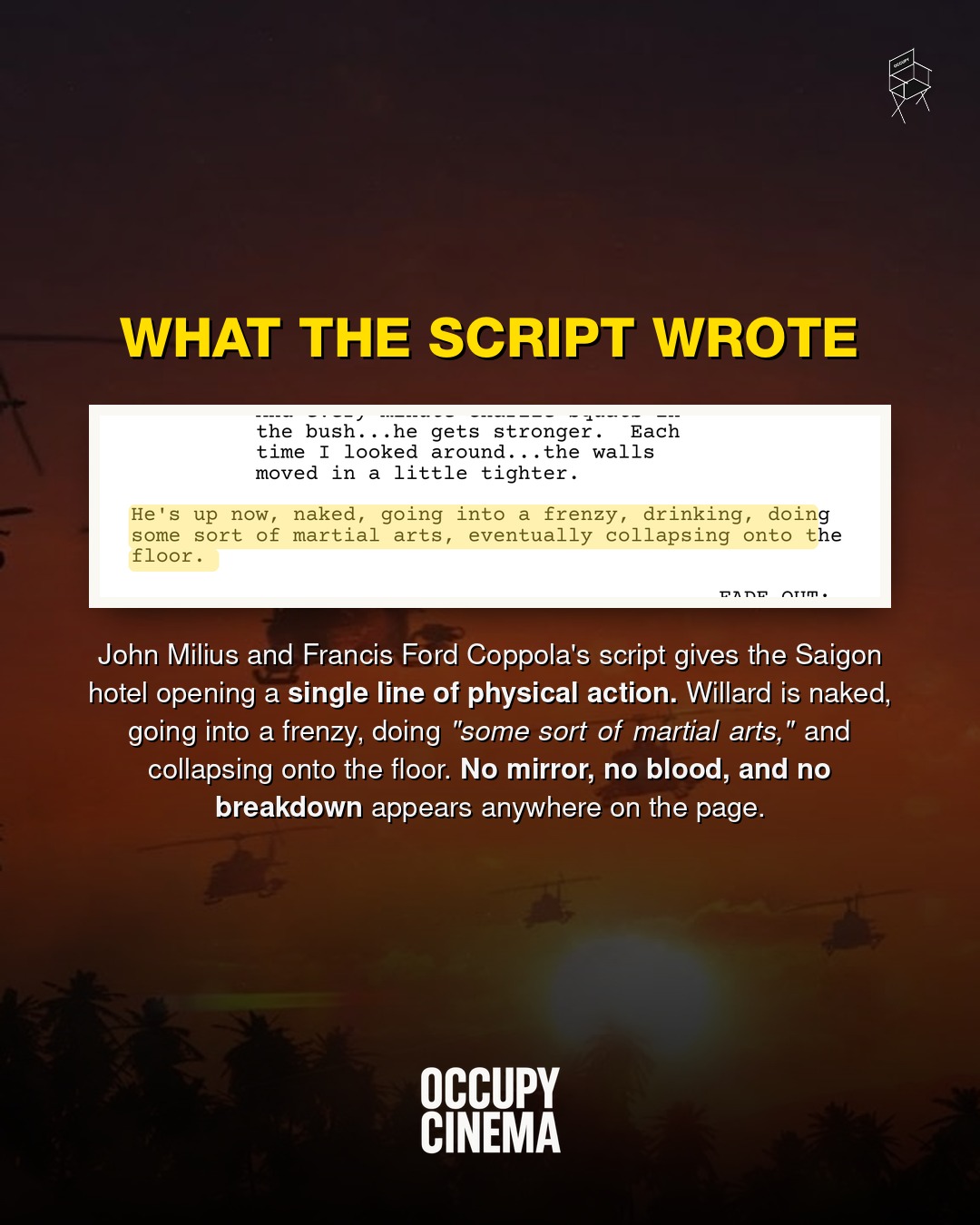
The original blueprint, penned by John Milius and Francis Ford Coppola, offered only the faintest sketch for Captain Benjamin L. Willard’s introduction. A single, laconic line described him as “naked, going into a frenzy, drinking, doing some sort of martial arts, eventually collapsing onto the floor.” There was no mention of a mirror, no blood, no profound emotional collapse on paper. It was a blank canvas, awaiting an imprint of something real, something harrowing.
The Incandescent Truth of the Moment
The true genesis of this scene unfolded on August 3, 1976, Martin Sheen’s 36th birthday, an occasion marred by personal demons and the oppressive weight of a notoriously difficult production. Sheen arrived on set in a state of inebriation, a vulnerability that Francis Ford Coppola, ever the alchemist of human emotion, recognized and seized upon. Coppola’s direction was simple, yet devastatingly profound: look into the mirror, confront yourself. What followed was an act of spontaneous combustion, a melding of actor and character so complete it transcended performance.
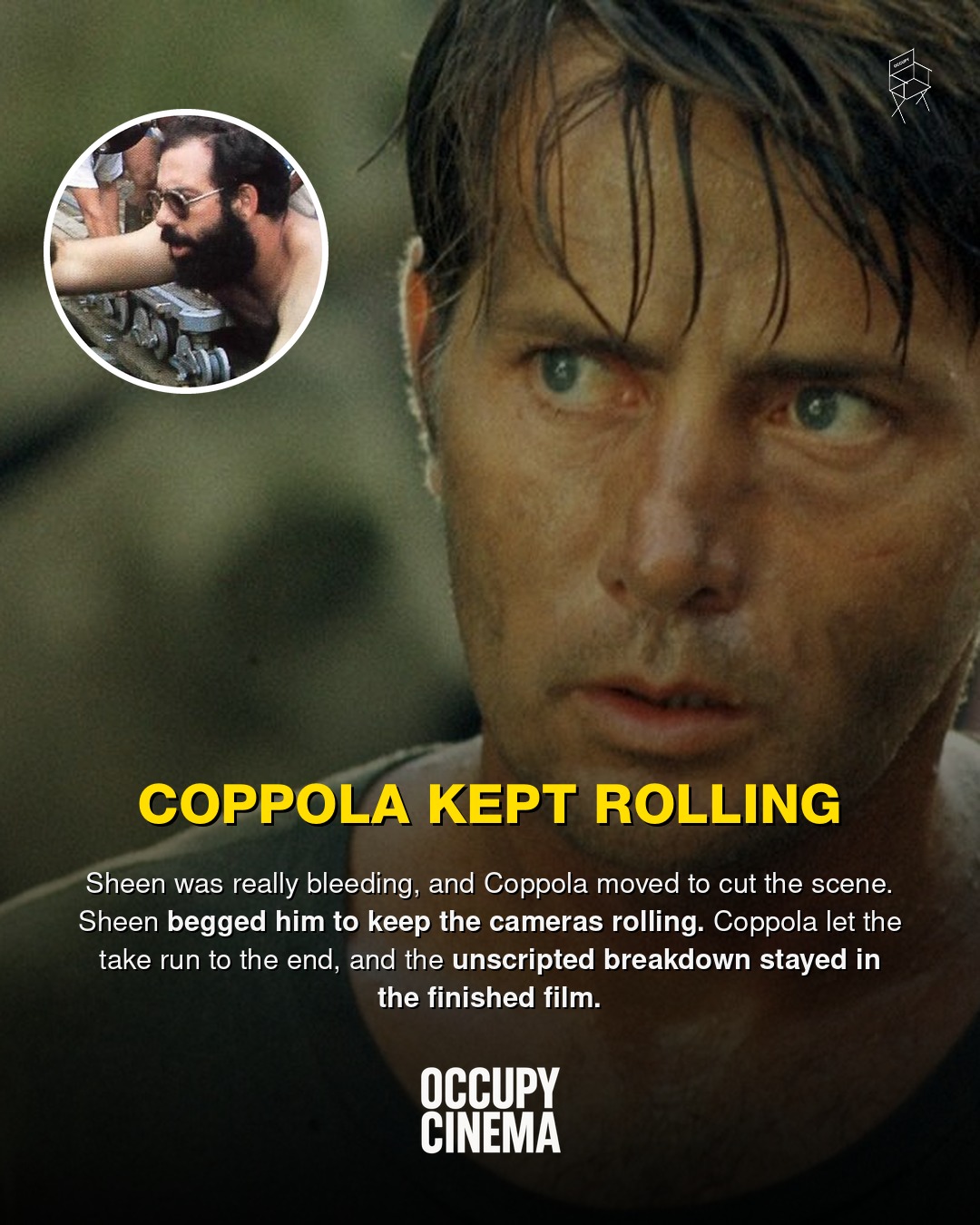
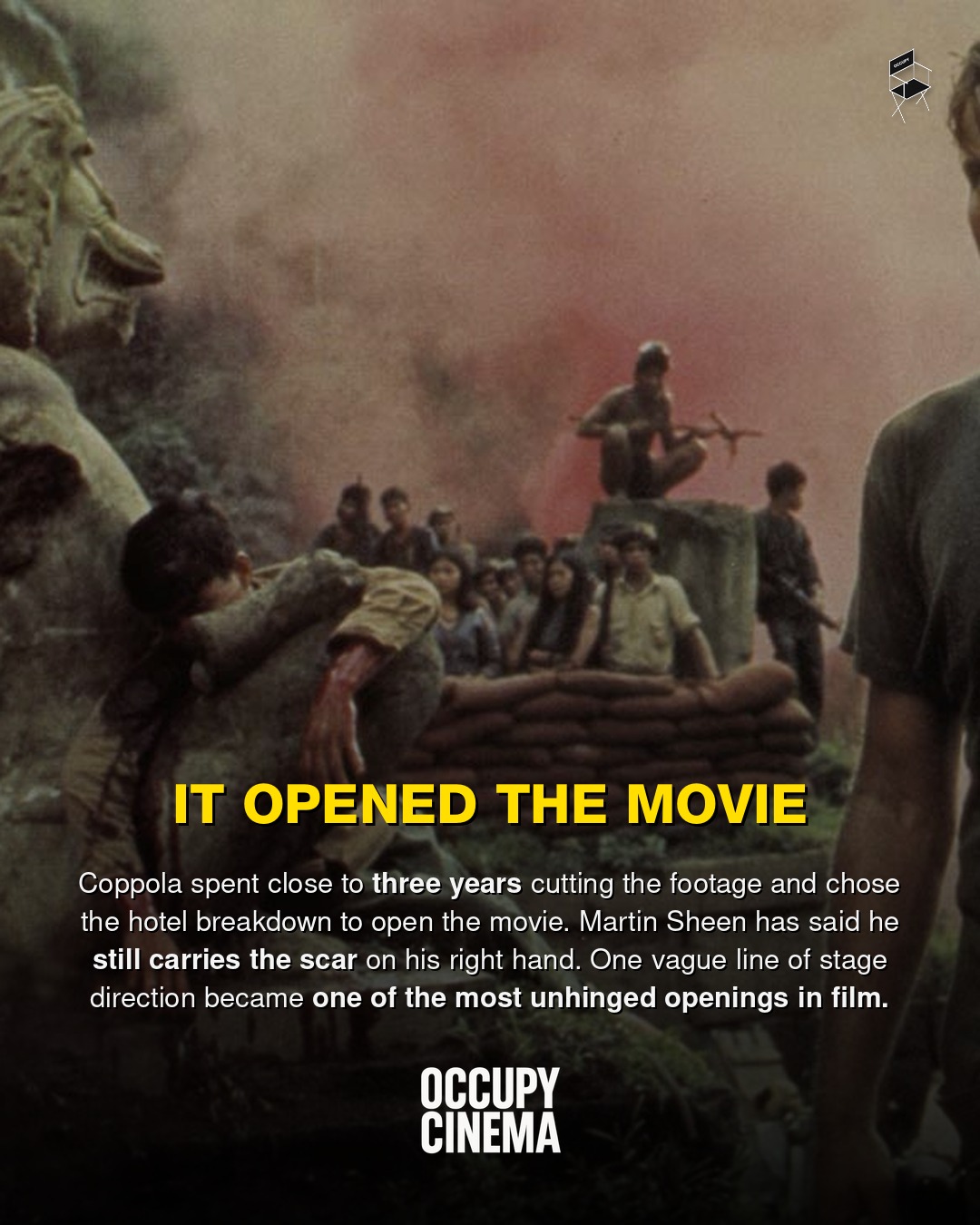
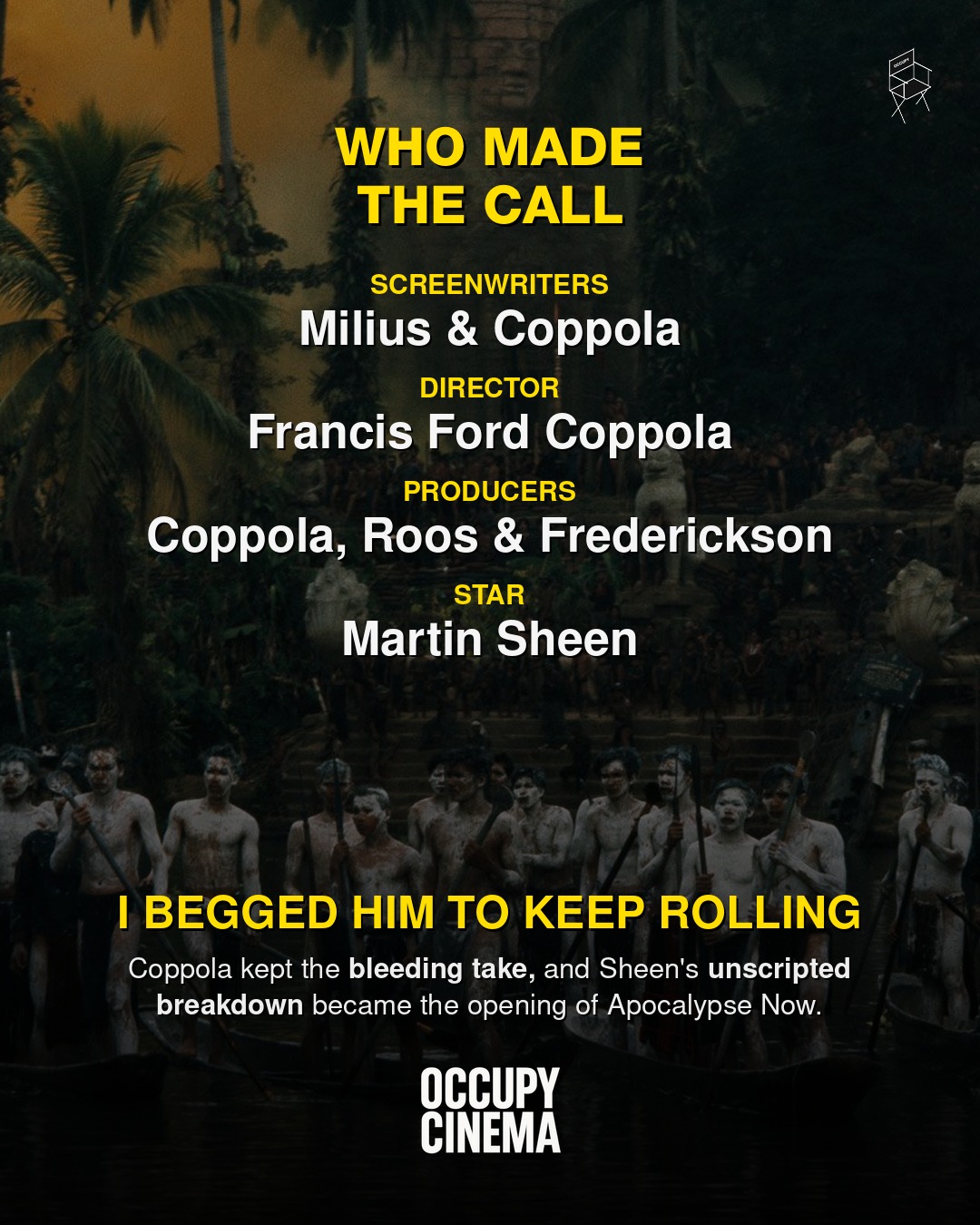
Sheen, in a moment of desperate catharsis, struck a real glass mirror, not a prop. His hand, genuinely severed, bled onto his face, mingling with tears that were undeniably his own. It was an explosion of grief and self-loathing, an unburdening witnessed by the camera. Coppola, a director known for his relentless pursuit of authenticity, allowed the scene to unfold, even as Sheen, through his agony, pleaded for the cameras to continue rolling. This unscripted, visceral outburst became the unforgettable opening of the film, a testament to the unpredictable nature of artistic creation and the profound sacrifices made in its name. Sheen himself carries a tangible reminder of that day, a scar on his right hand, a permanent etching of a moment where art and life blurred into a single, painful truth. This extraordinary sequence highlights how Coppola’s directorial instincts, combined with Sheen’s raw courage, transmuted a simple stage direction into a legendary cinematic event.
Beyond the Page, Into the Soul
This episode serves as a powerful reminder that while screenplays provide the skeletal structure, the true flesh and blood of a film often emerge from the collaborative dance between director, actor, and the serendipitous currents of life itself. It is in these moments of unplanned intensity, when the boundaries between performance and reality dissolve, that cinema achieves its most profound impact. The opening of Apocalypse Now is not merely a scene, but a visceral experience, a plunge into the psychological abyss that sets the stage for the hallucinatory journey into the heart of darkness. It underscores the enduring power of filmmakers like Francis Ford Coppola to push beyond the conventional, to seek out and capture the incandescent truth that lies just beneath the surface of the script, transforming mere words into an unforgettable cinematic legacy. You can even find books detailing the making of Apocalypse Now that delve into these very moments of improvised brilliance.