Occupy Cinema › Exhibition
The Enduring Resonance of Jane Campion's The Piano
More than an artistic triumph, Jane Campion's seminal film, The Piano, stands as a quiet testament to the power of independent vision, defying conventional wisdom and reshaping cinematic history.
By Occupy Cinema ·
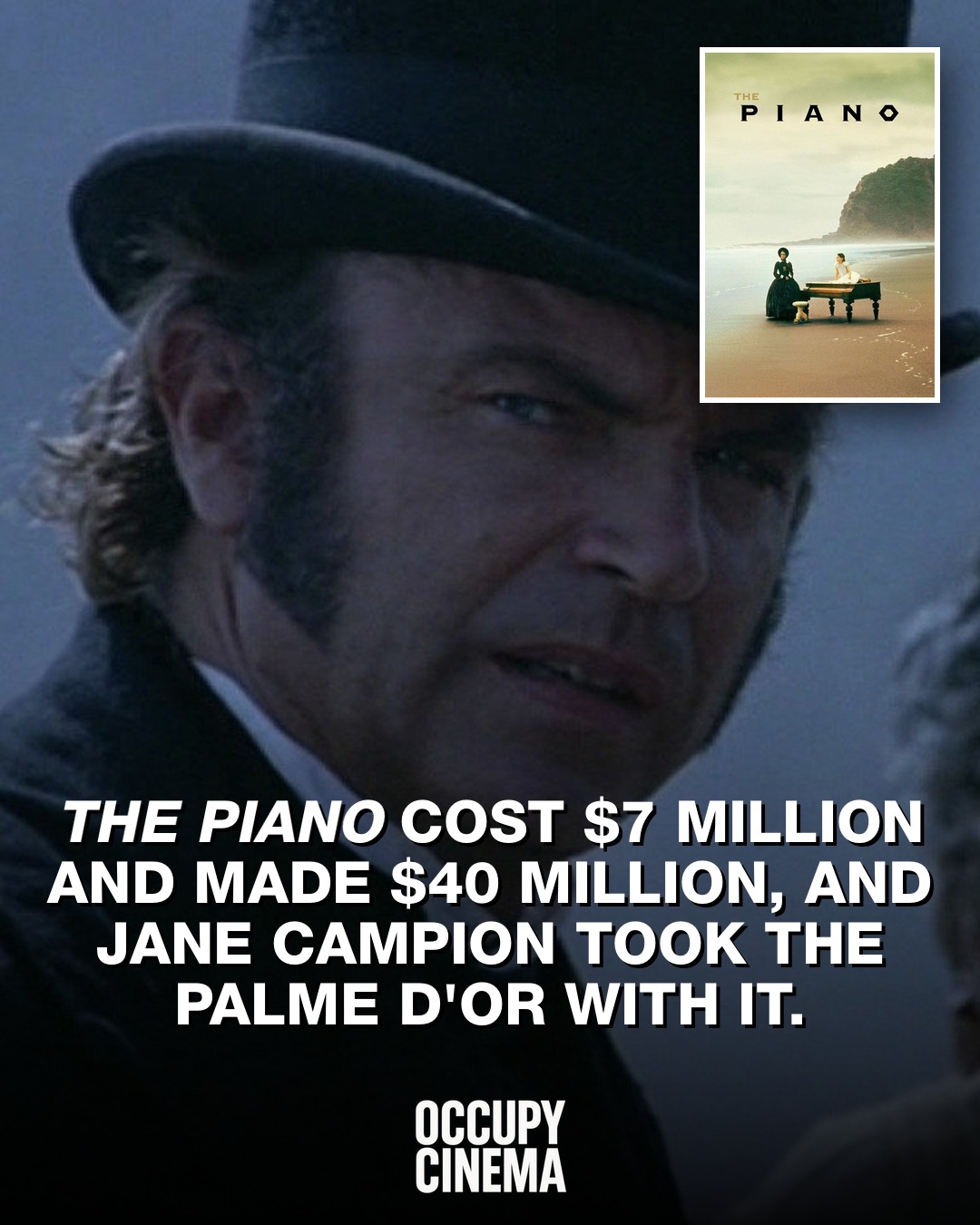
The hushed, grey light of a New Zealand shore, the biting wind carrying the scent of salt and earth, and a piano, impossibly delicate, stranded in the vastness. This image, stark and unforgettable, is where Jane Campion's The Piano begins its journey, a film that feels less like a narrative and more like a deeply personal excavation. It is a work woven with the threads of silence, yearning, and the raw, untamed landscape, and its quiet power resonated far beyond the art house circuit, leaving an indelible mark on cinema history.
It is easy to speak of its artistic merits, the way Campion conjures a world both brutal and tender, or the visceral performances that anchor its emotional core. But the story of The Piano is also a profound argument, told not in words, but in the cold, clear language of numbers. In an industry often dictated by formula and expectation, this film, made for a modest seven million dollars, transcended its origins. It garnered over forty million dollars at the box office, a remarkable feat for an independent feature, particularly one from New Zealand, directed by a woman, featuring a protagonist who communicates without speech, and devoid of the conventional star power often deemed necessary for commercial success.
A Groundbreaking Achievement
The film's impact was not confined to its financial performance. It ascended to the highest echelons of critical recognition, securing three Academy Awards. More significantly, it etched Jane Campion's name into the annals of cinematic legend as the first woman to ever win the Palme d'Or at the Cannes Film Festival. This was not merely an award, but a declaration, a thunderclap in the quiet halls of cinema, signaling a shift in perception and possibility. It was a moment that affirmed the singular vision of an auteur who dared to tell a story with a uniquely feminine sensibility, unafraid of its emotional depths or its challenging themes.
Beyond the director, the film's success was a symphony of dedicated craft. The evocative cinematography, which captures the elemental beauty and harshness of the New Zealand wilderness, was the work of Stuart Dryburgh, who rightly earned an Oscar nomination for his artistry. His lens found the poetry in the rain, soaked forests and the stark isolation of the coastline. Complementing this visual tapestry was the masterful editing of Veronika Jenet, also an Academy Award nominee, whose precise rhythm and pacing allowed the story's emotional currents to flow with an understated power, letting silence and expression speak volumes. And while the film bravely stood on its own merits, the presence of actors like Sam Neill, whose performance as the husband provides a crucial counterpoint to the film's central drama, further solidified its artistic integrity. The Hollywood Reporter chronicled this historic win, highlighting its significance for women in film. The film’s influence continues to be discussed, such as in this piece from Sight and Sound, exploring its lasting legacy.
An Enduring Legacy
The Piano was a quiet revolution, proving that authenticity and artistic integrity could indeed find a vast audience. It championed a different kind of cinema, one rooted in character and atmosphere, rather than spectacle. It remains a powerful reminder that the market, often perceived as an unyielding force, can be swayed and reshaped by a singular, uncompromising artistic voice. The film’s enduring presence in discussions of great cinema is not just about its awards or its box office, but about the way it expanded our understanding of what film can be, a testament to the fact that sometimes, the most profound arguments are made not with booming pronouncements, but with the haunting melody of a piano on a windswept beach.
Luna Greenwood, World and Arthouse, Occupy Cinema.
Related reading: Making Movies by Sidney Lumet, a master class on the craft of filmmaking.