Occupy Cinema › Exhibition
The Enduring Sanctuary of the Cinema Experience
In a world saturated with constant digital engagement, the intrinsic value of the theatrical experience transcends mere screen size, offering a rare refuge from the ceaseless demands of the digital sphere.
By Occupy Cinema ·

The Allure of Forced Attention
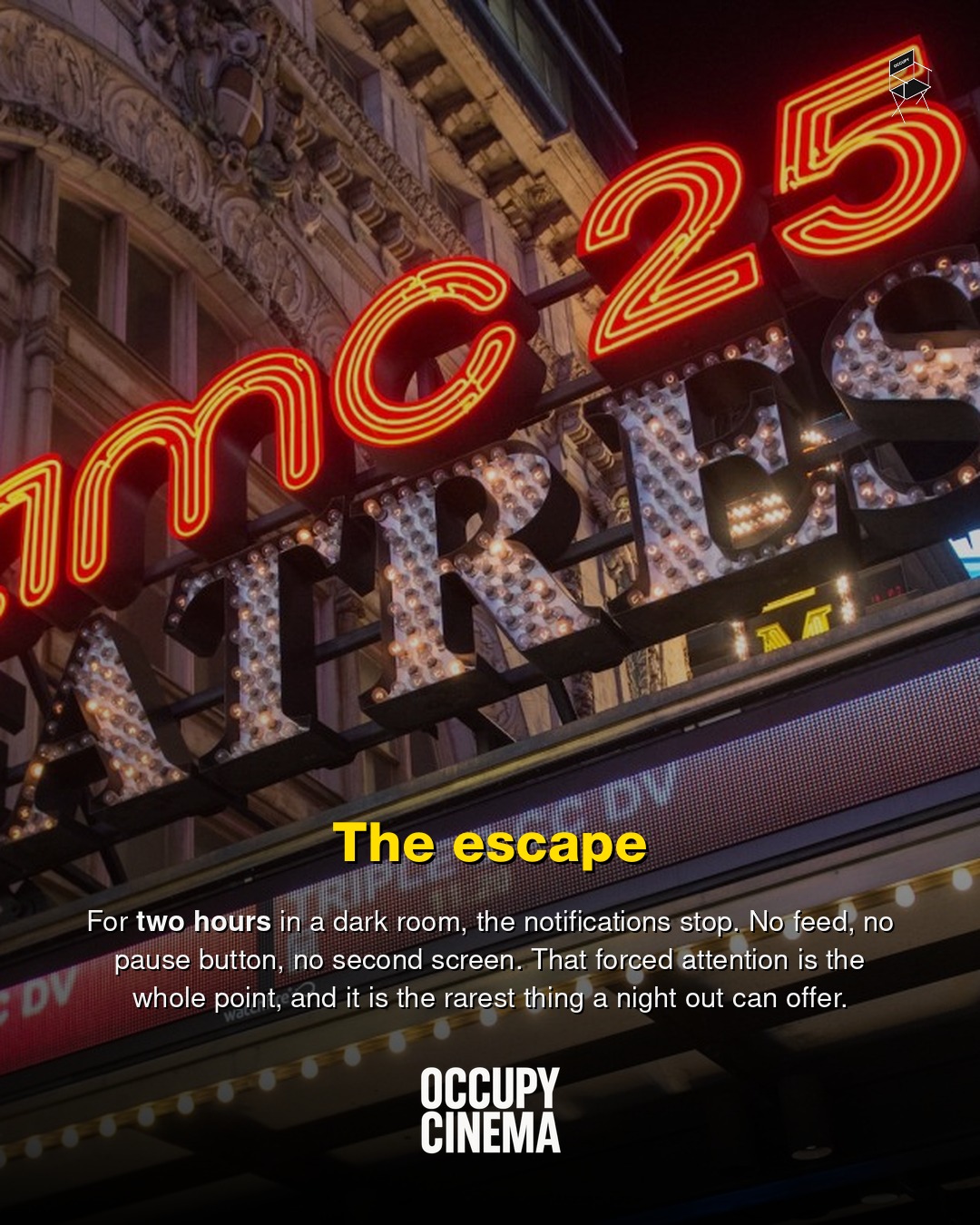
The contemporary cinematic landscape often grapples with its relevance in an era dominated by streaming platforms and personalized, on-demand content. However, the true value of the movie theater in 2026, and indeed for the foreseeable future, resides not in technological advancements or even the sheer scale of the projection, but in its unique ability to command undivided attention. Consider the simple, yet profound, act of entering a darkened auditorium where the pervasive glow of smartphones is actively discouraged, if not entirely prohibited. For a fleeting two hours, the incessant deluge of notifications, the algorithmic pull of social media feeds, and the constant temptation of a 'second screen' are effectively nullified. This enforced digital detox, this period of singular focus, has become an increasingly scarce and therefore precious commodity in modern life.
For many, the distinction between active engagement and passive consumption has blurred, mediated by devices that simultaneously connect and distract. The cinema offers a singular counterpoint to this fractured attention economy. It is a space designed for immersion, where the narrative unfolding on screen demands and receives primacy. This deliberate disconnection from personal devices fosters a kind of mental reset, a temporary liberation from the digital tether that binds us to our daily routines and obligations. It is a unique form of escape, and perhaps the most compelling product the theatrical experience can offer today.
The Unreplicable Communal Spectacle
Beyond the personal escape, there is the undeniable power of the communal experience. A film viewed in a crowded theater is qualitatively different from one watched alone at home. The collective gasps, the synchronized laughter, the shared tension, and even the palpable silence of an audience fully engrossed in a story create an emotional resonance that streaming services simply cannot replicate. This shared emotional journey amplifies individual reactions, transforming a solitary viewing into a collective event. Directors like Christopher Nolan have consistently advocated for the theatrical presentation of their work, understanding that the architectural design of a cinema, combined with the presence of an audience, is integral to the intended impact of their films. His films, celebrated for their intricate narratives and immersive soundscapes, are often cited as prime examples of works best experienced in a dedicated cinema setting. One might recall the overwhelming sense of scale in Dunkirk or the auditory immersion of Oppenheimer, both designed to envelop the viewer entirely.
This communal charge is not merely an added bonus, but a fundamental aspect of the cinematic art form, hallowed by decades of film history and celebrated at festivals such as Cannes, Venice, and Toronto. These events underscore the power of gathering to witness stories unfold, to engage in a shared cultural moment. The last time a movie truly made you forget your phone existed, it was likely within the hallowed halls of a cinema, surrounded by others equally captivated. This profound ability to transport and unite an audience remains the theater's most potent and irreplaceable asset.