Occupy Cinema › Exhibition
The Enduring Allure of the Darkened Theater in a Hyper-Connected World
In an era dominated by perpetual digital connection, the cinema offers a unique, invaluable commodity: forced, uninterrupted attention and communal experience.
By Occupy Cinema ·

The discourse surrounding the future of cinema often centers on technological advancements, premium formats, or the ongoing battle between theatrical exclusivity and day-and-date streaming releases. Yet, beneath these prominent discussions lies a more fundamental, almost philosophical argument for the enduring relevance of the movie theater experience: its capacity to provide a genuine escape from the digital deluge.
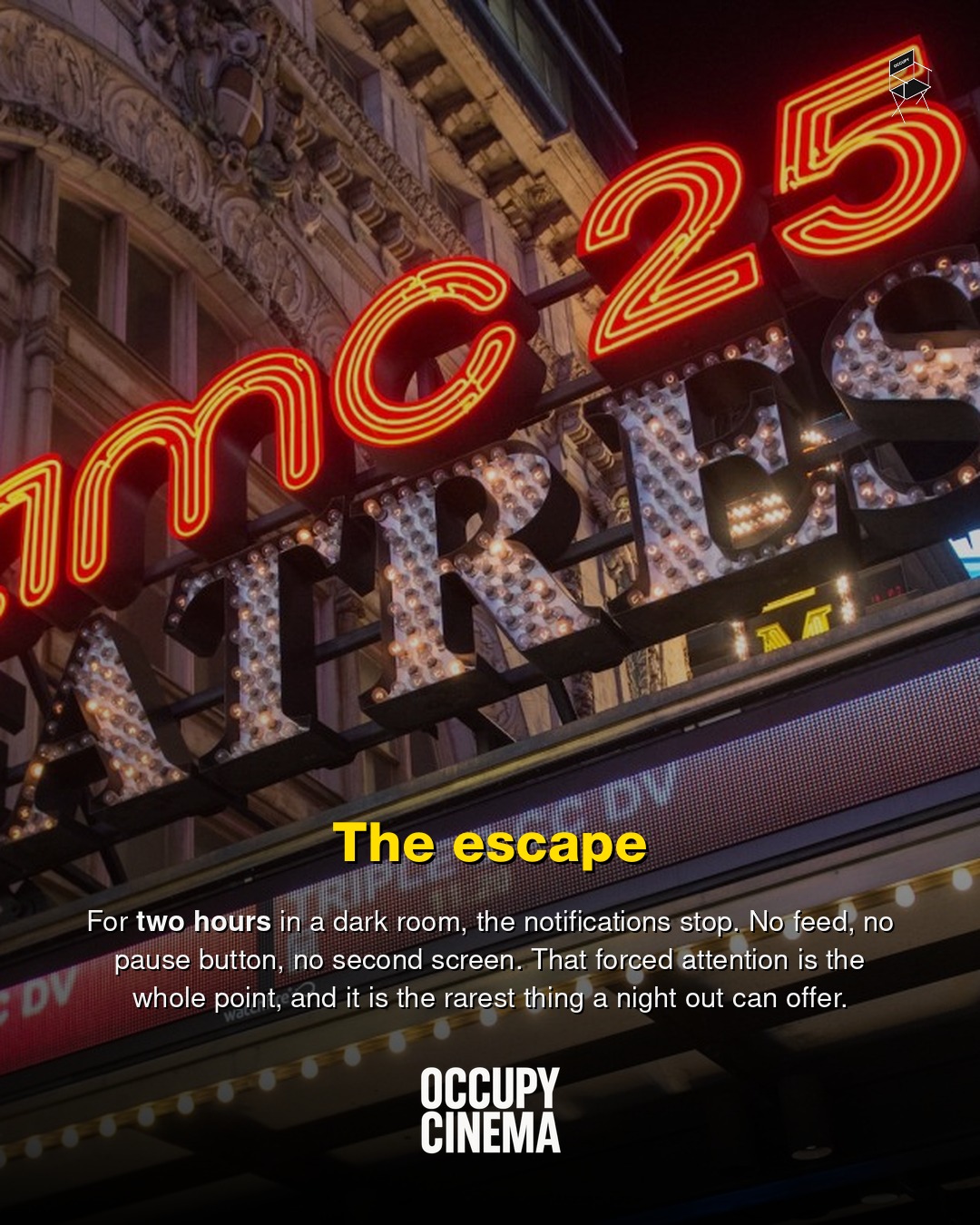
It is not the sheer size of the screen, nor the fidelity of the sound system, that defines the cinema's irreplaceable value in 2026. While these elements contribute significantly to immersion, the true premium commodity offered by a darkened auditorium is the enforced cessation of digital distraction. For two hours, the ubiquitous smartphone goes dark, and the relentless feed, the constant stream of notifications and information, simply cannot reach you. In a life increasingly lived across multiple screens, where our attention is fragmented and constantly contested, this mandated solitude and focus become extraordinarily rare and valuable.
The Scarcity of Uninterrupted Attention
Consider the average daily engagement with digital devices. Studies consistently show that individuals check their phones hundreds of times a day, with notifications pulling focus at regular intervals. This persistent connectivity, while offering convenience, has eroded our capacity for sustained, deep engagement with a single task or narrative. The cinema, by its very architecture and social contract, demands this sustained attention. It is a space designed for singular focus, a communal ritual where the outside world recedes, if only temporarily. As one recent industry report observed, the captive audience of a movie theater presents an unparalleled opportunity for immersion, a quality increasingly difficult to replicate elsewhere.
This forced attention is not a constraint but a liberation. It allows for a deeper entry into the film's world, a more profound emotional resonance, and a genuine forgetting of one's own immediate concerns. When was the last time a movie, watched at home amidst the glow of other devices, truly made you forget your phone existed? For many, this level of immersion is now almost exclusively reserved for the theatrical experience, a testament to its unique power.
The Irreproducible Communal Charge
Beyond individual immersion, there is the undeniable, irreproducible charge of a full room reacting together. The collective gasp, the shared laughter, the synchronized tension, these are elements that streaming, for all its convenience, simply cannot copy. This communal experience transforms film viewing from a solitary consumption into a shared event. It reinforces our connection to narrative as a fundamental human need and our desire to experience powerful stories in concert with others. The New York Times recently highlighted the social aspect of moviegoing as a key driver for younger audiences, suggesting a re-evaluation of what constitutes a 'night out' in the entertainment landscape.
The escape, then, is not merely from one's physical surroundings, but from the demands of the digital world and the isolation of individual consumption. It is an escape into a story, into a shared moment, and into a state of uninterrupted presence. In this context, the cinema offers not just entertainment, but a vital respite, a sanctuary for attention in an increasingly fragmented reality. This makes the theatrical experience not just relevant, but perhaps more essential than ever before.