Occupy Cinema › Development
The Tangible Allure of Dated Cinema Merchandise
Exploring the concept of physical, date-stamped film merchandise as a counterpoint to ephemeral digital scarcity, and its potential to re-engage audiences with the theatrical experience.
By Occupy Cinema ·

The idea of tangible, date-stamped film merchandise presents an interesting proposition for audience engagement. Imagine attending a screening and being able to acquire a piece of memorabilia, a t-shirt perhaps, uniquely marked with the specific date of your viewing. This is a departure from the mass-produced items typically found at cinema concessions, offering a distinctly personal artifact for the film enthusiast.
This concept directly addresses the inherent value proposition of scarcity, a principle that has seen varied applications in recent years. We have observed the trajectory of digital scarcity, particularly with non-fungible tokens, or NFTs. The nascent market in 2021 saw significant activity, with sales reaching approximately 2.9 billion USD and individual pieces, such as Beeple's 'Everydays: The First 5000 Days,' commanding figures upwards of 69 million USD. However, this speculative bubble proved transient, with market values experiencing a precipitous decline by late 2022, effectively eroding much of the perceived digital value. The failure here was not in the concept of scarcity itself, but in its execution and the medium's inherent lack of physical permanence.
Reclaiming Physicality
The proposed dated merchandise model reintroduces physicality into the equation, anchoring the collectible to a specific, unrepeatable event: the individual theatrical viewing. This aligns with the intrinsic nature of cinema attendance, which even in an era of ubiquitous streaming, remains a communal, time-bound experience. A physical item, marked with that specific date, transforms a transient event into a lasting memento. It is not merely a shirt, but a chronicle of a particular evening, a specific film, and a shared experience.
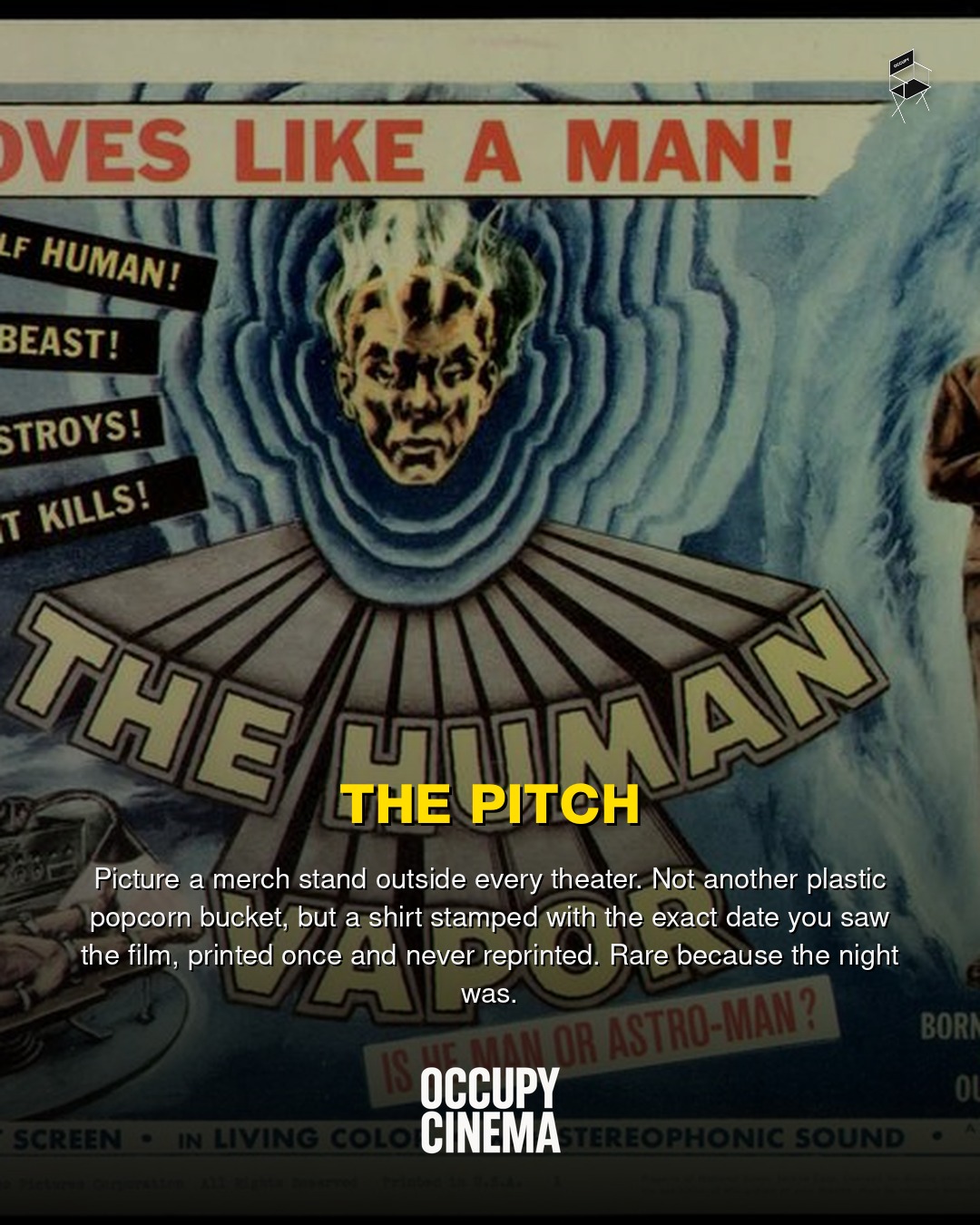
Consider the difference between a standard film poster, of which thousands might be printed, and a shirt bearing the indelible mark of 'October 26, 2024, 7:00 PM Showing.' The latter possesses an immediate and undeniable uniqueness. This is a mechanism for creating genuine scarcity, one that is earned through attendance and participation, rather than artificially generated or speculative. It eschews the plastic popcorn bucket, a disposable item, in favor of something with actual, enduring sentimental and perhaps even future collector value. It is a subtle but significant shift from mere consumption to curated acquisition.
The Appeal to Collectors and Cinephiles
For cinephiles and collectors, such merchandise could foster a renewed sense of engagement with the theatrical release cycle. It offers an incentive beyond the film itself, a tangible reward for making the effort to see a film in its intended format, whether that is IMAX 70mm or a more intimate 16mm projection. This approach acknowledges that the act of going to the cinema is an event in itself, one worthy of commemoration. It moves beyond the ephemeral digital promise, grounding value in a physical object tied irrevocably to a lived experience. This could be a compelling strategy for exhibitors looking to differentiate the theatrical experience in a crowded media landscape, providing an additional layer of incentive for audiences to step away from their home viewing setups. The fixed date makes each item a unique historical record of an evening at the movies.