Occupy Cinema › Business
The Shifting Landscape of Film Production: Tax Incentives and Regional Opportunities
The geographical distribution of film and television production continues to evolve, driven largely by aggressive tax incentives offered by various states and countries, creating robust opportunities outside traditional industry hubs.
By Occupy Cinema ·

The long-held axiom that a career in film necessitates relocation to Los Angeles is increasingly outdated. Industry migration, specifically the physical movement of production units, has followed a clear economic incentive structure, namely tax credits. These financial mechanisms, designed to stimulate local economies and foster indigenous talent, have fundamentally reshaped where content is created.
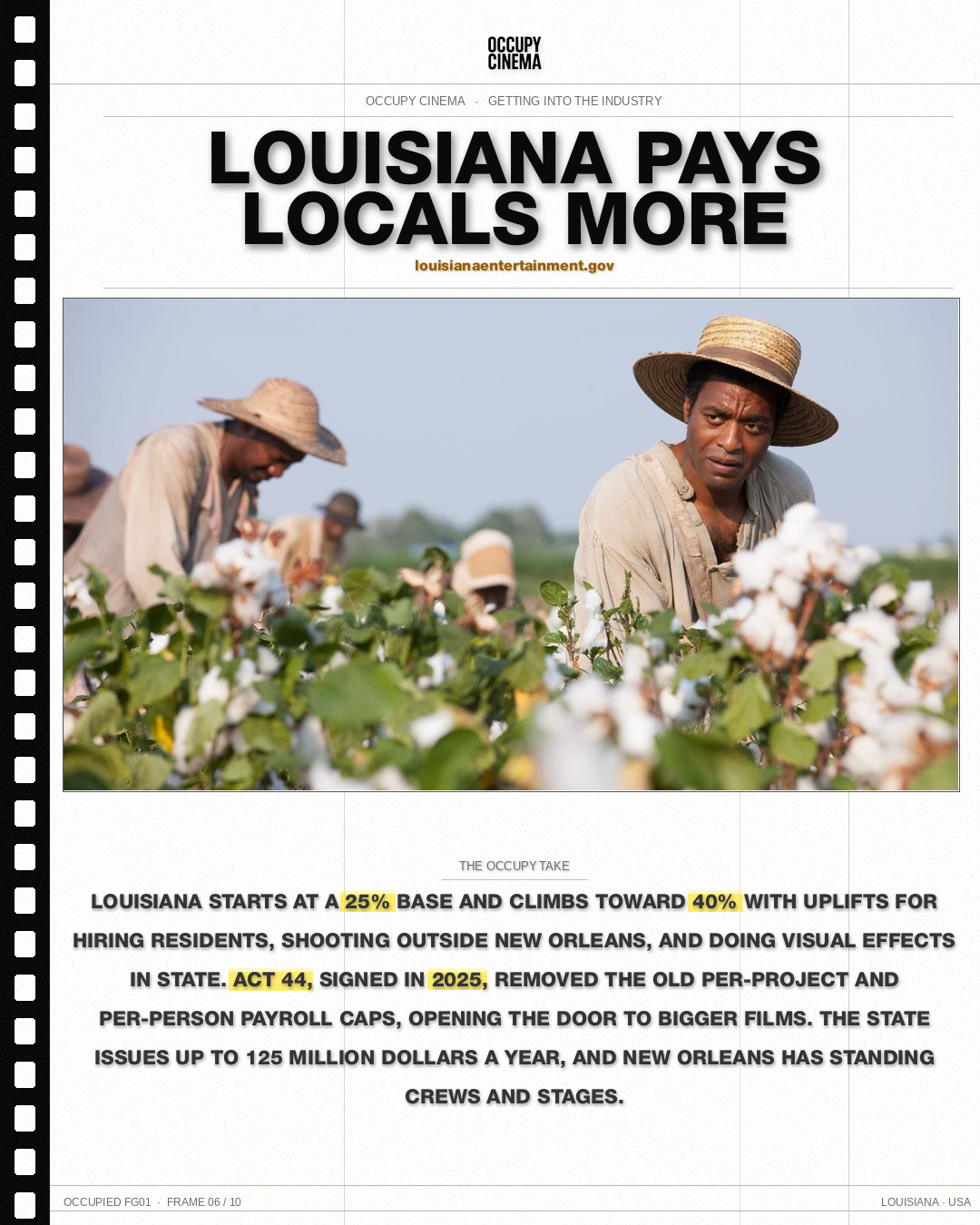
Consider Georgia, a prominent example within the United States. The state offers a 20 percent base tax credit, which can increase to 30 percent if the project includes the Georgia Peach logo. This credit is fully transferable and operates without an annual cap, providing substantial financial benefits for productions. Furthermore, Georgia intends to reinstate a post-production credit effective January 2026, further incentivizing a complete production pipeline within the state. Texas, not to be outdone, has allocated a 1.5 billion dollar program, though it mandates that 35 percent of the cast and crew must be local. New Mexico has effectively secured permanent production facilities for entities like Netflix and NBCUniversal, backed by a 140 million dollar cap on its incentive program. Louisiana is also escalating its offerings, with Act 44 removing previous caps and pushing incentives towards 40 percent in 2025.
International Incentives and Local Pathways
The trend extends globally. The United Kingdom provides up to a 39.75 percent tax relief for films budgeted under 15 million pounds. Ireland offers 32 percent, increasing to 40 percent for projects under 20 million euros. British Columbia will offer 36 percent as of 2025, and Australia maintains a 30 percent incentive with no cap on eligible spend. These figures highlight a competitive global market for production, where financial subsidies are a primary driver of location decisions. This distributed production model means that aspiring filmmakers and crew members no longer need to converge on a single geographic point to find work.
For individuals looking to enter the industry, understanding these regional dynamics is crucial. Every state in the United States, and many countries and provinces internationally, operates a Film Commission. These offices are not merely bureaucratic entities they are direct conduits to local production opportunities. They typically maintain public crew directories and, in many cases, job hotlines.
Navigating Entry into the Industry
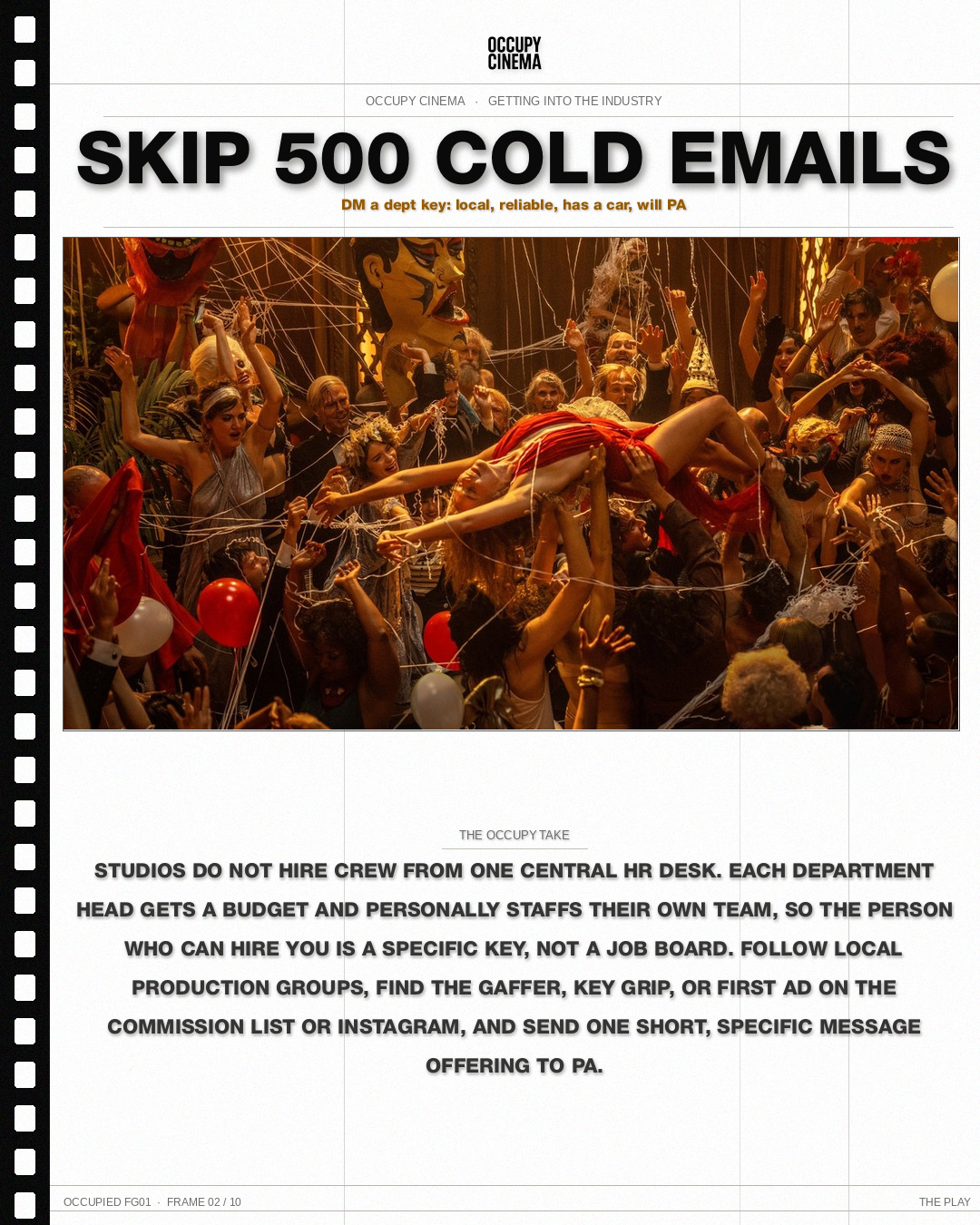
The most effective method for securing an entry-level position, such as a Production Assistant, is often not through a generalized application portal. Department heads, not human resources departments, are typically responsible for hiring their teams and managing departmental budgets. The strategy then becomes highly localized and direct. Engaging with your state's Film Commission, registering for their crew list, and following local production groups on professional social platforms are foundational steps. The subsequent action involves identifying a specific department head, perhaps through a local production listing or networking, and sending a direct, concise message offering to work as a Production Assistant. This approach leverages the decentralized nature of modern film production and targets the actual decision-makers.
Prospective crew members should search for their state's film commission online, register their details, and then begin the targeted outreach process. Tools such as The Film Production Handbook or A Production Assistant's Guide to the Film Industry can provide foundational knowledge for those new to the field, but direct engagement remains paramount. This approach bypasses traditional, often slower, recruitment channels and places the individual directly in front of potential employers who are actively building their teams for specific projects. The industry has evolved, and so must the methods of entry into it.